Category: Notes from the Studio

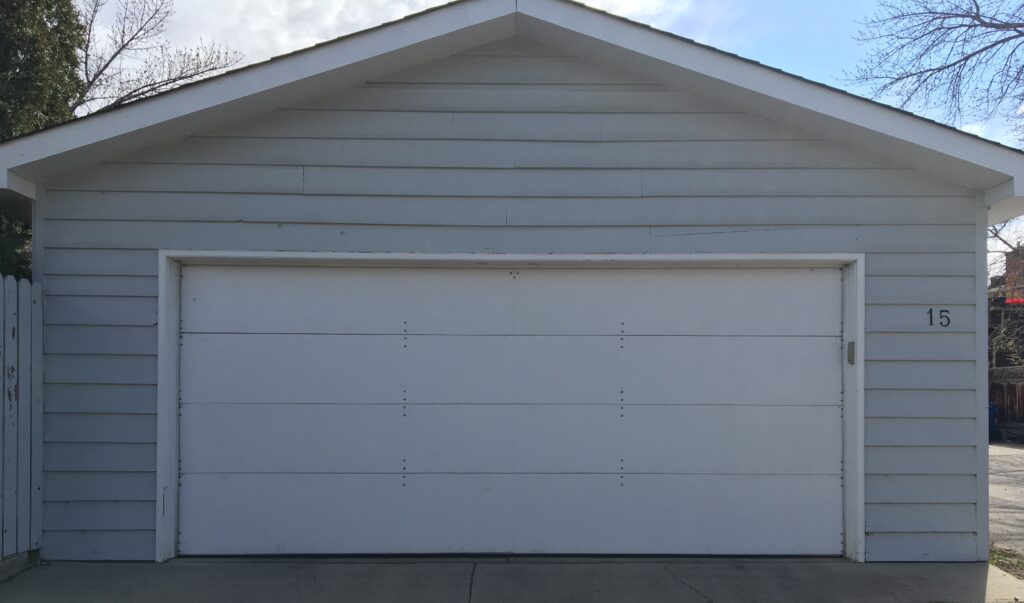
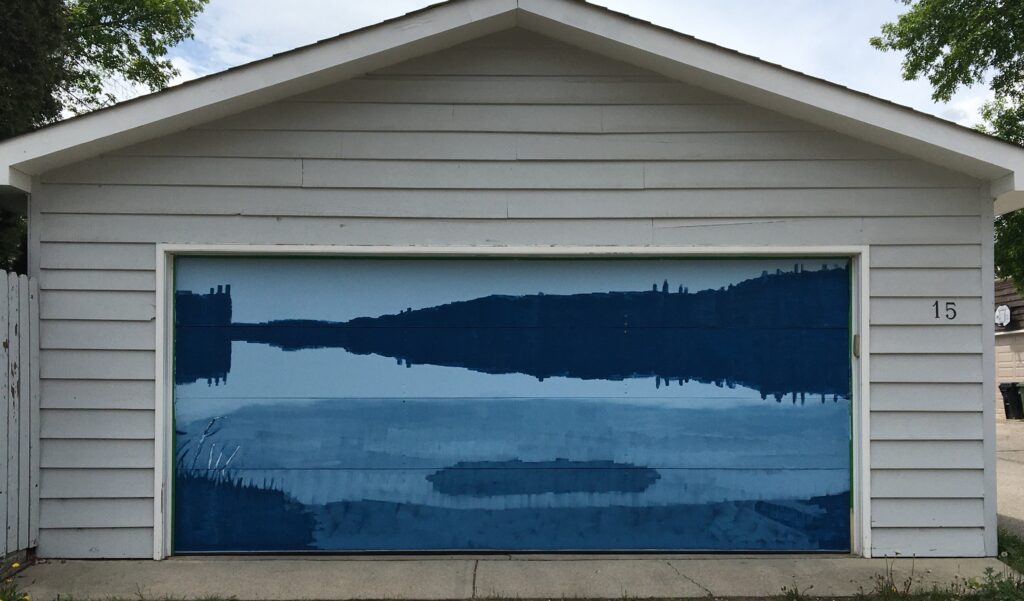
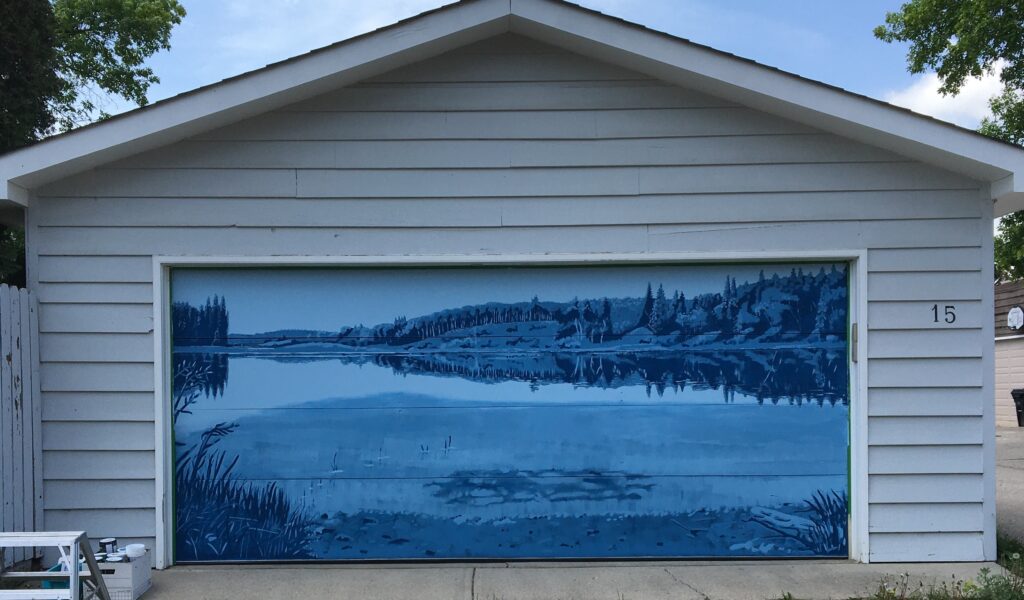
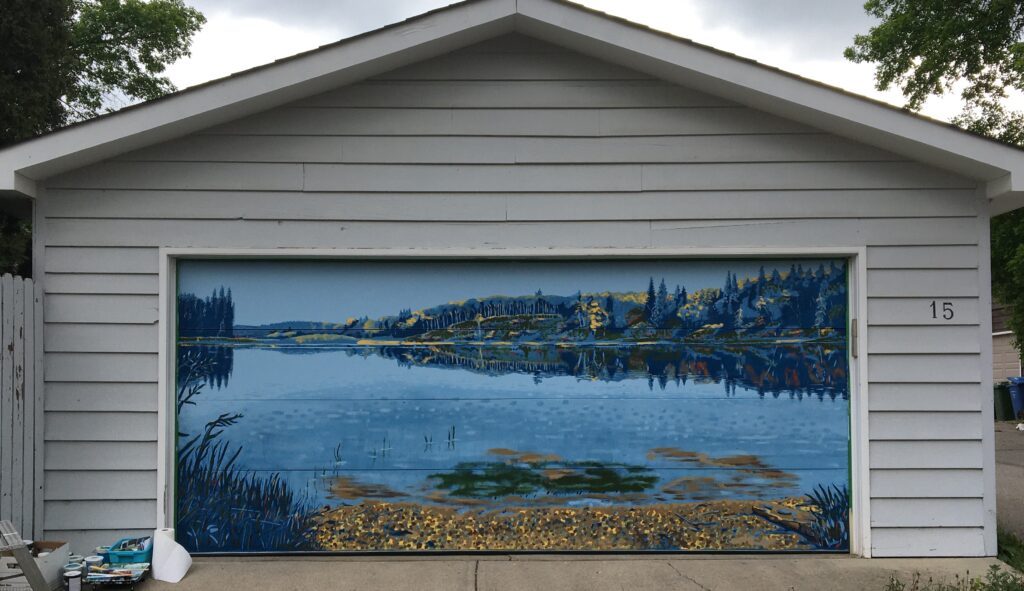
I Painted A Serene Lake Scene On My Garage Door!

Sawmill Lake, 8’x16′, exterior mural on wood garage door, 2022.

Early this summer I painted this exterior mural on the new garage door my husband built and installed last year. It was his idea to do a mural on what looked like a big blank canvas to both of us, and with that sort of faith in my abilities, how could I decline the opportunity right?

The image we chose was from a recent visit to the lake country around my husbands childhood home. This was a small local swim and camping spot walking distance from his home. You can see our grown up kids in the picture, but I opted not to include any figures in the painting.

Neighbourhood response was so positive to this mural that I have decided to open up possible bookings for garage door murals for next summer. Prices would start at $2500 in Calgary. I would only have a few slots available, weather dependant, so if you are interested in getting a mural done, make sure to touch base with me early in the new year to reserve a slot.

Recent Reads: The Rhetoric of Perspective

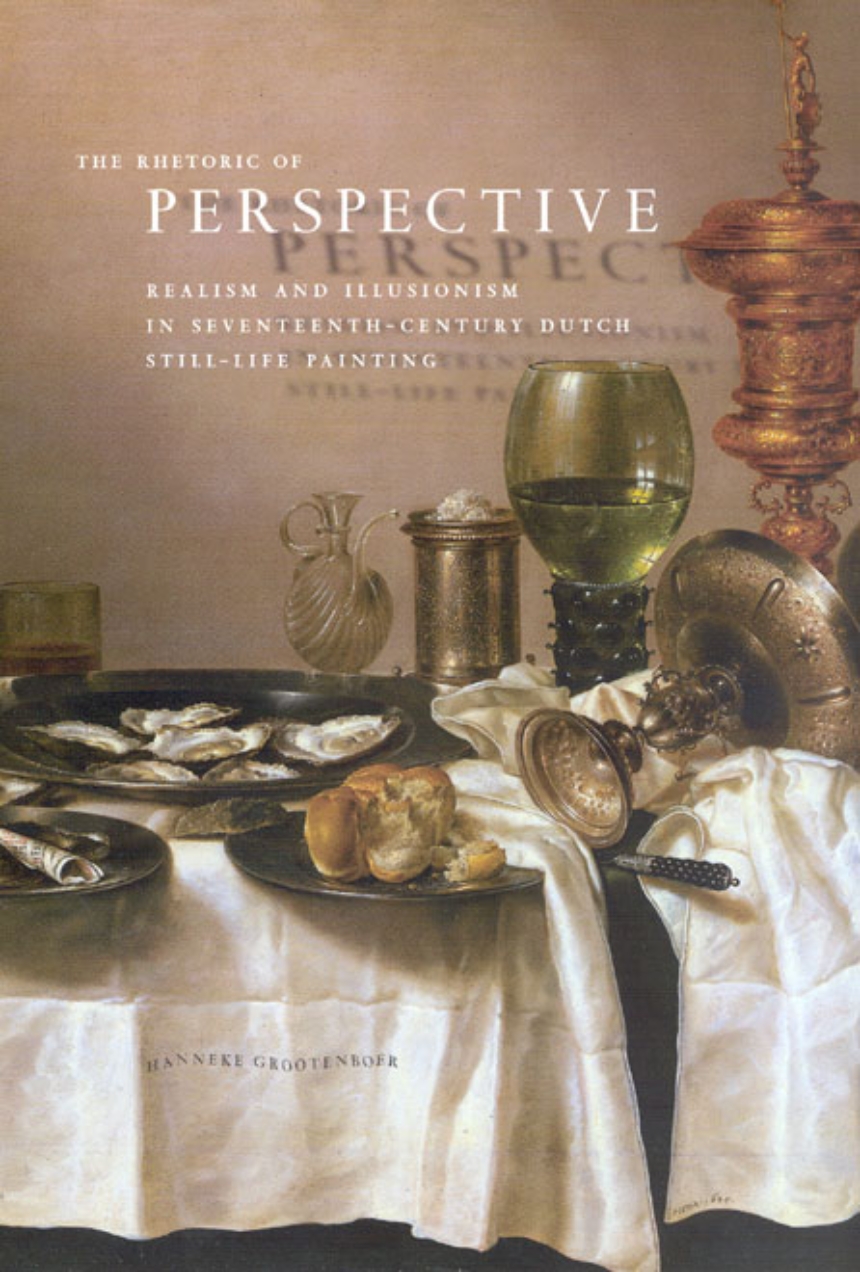
The Rhetoric of Perspective: Realism and Illusionism in Seventeenth-Century Dutch Still-Life Painting – Hanneke Grootenboer

Warning, do not think this is a light Sunday read! So this book is a dense one, with a lot of reinterpretation of language to draw connections between disparate writings of art historians and philosophers. However, as I’ve been fascinated with the 17th century Flemish still life painter Clara Peeters, and it had a picture of a dutch still life painting on the cover, I had to commit to read this book fully. I over-ran my renewals at the library on this one but I made it.

Essentially she goes through many convoluted arguments to prove that painting is a form of thought. Well duh, I thought, ask any artist and you will get that answer. I think through art. Not while making art, well that too, hopefully, but through making art. That is why a painting is never merely an execution or illustration of an idea for me. It is an organic thing that shifts, changes and offers new discoveries along the route to completion. It is a discussion, which I initiate, but does not always go in directions I expected.

However despite not requiring her proofs, I gained a great deal from reading them. Of course I was familiar with anamorphism in painting (The Ambassadors (1533), Hans Holbein the Younger), however her exploration of its many iterations lead me to think about the possibilities of incorporating anamorphism into my paintings. Watch for that.

I was also enchanted with the idea of the painting looking back at us, the missing perspective which can be seen illustrated in paintings of reflective surfaces that sometimes depict the artist or the room beyond the painting.

I became fascinated with an idea, which might be my own mis-interpretation of her text, that the blank space behind a breakfast piece might function as an implied mirror. In the book she uses the example, The Holy Family (c.1513) by Joos Van Cleve, paired with Little Breakfast (c.1636) by Pieter Claesz. The former is an icon painting of Mary and the Christ-child at a breakfast table, while the later depicts breakfast items in the same order of the placement in the former; cup. knife, plate of food. However in the former the knife is placed as it would be if Mary, who faces out from the picture plane, had just used it, while in the later its placement is such to imply the painter, or the viewer had just used it. Looking at the table I realized that some of Clara Peeters breakfast pieces also resemble an inversion of that table, but with the knife switched to the side of the table that a right handed person, or Mary herself were she in the position of the viewer, would have placed it. The blank background (the author also studies the practice of painting the backs of canvases during the Dutch Golden Age) implies that the canvas surface, the barrier between us and the invented space of the picture is now on the other side of the table. Thus the breakfast piece paintings place the artist or viewer in the position of the Mary and Christ-child. If there were a mirror in that position the viewer would see herself looking back at someone in the position of the Icon at her breakfast table, thus giving quite a mental trip for a viewer familiar with religious painting: is that my reflection or am I the person that is being addressed by the person in the reflection? This led me to wonder if this reversal of view would have been recognized by the viewer, and would it have appealed to women specifically, asking them to recognize that holy state within themselves, without being as brazen as Albrect Durer when he takes the Christ pose in his Self Portrait at Twenty-eight (1500)?

This is not the authors argument, she is not interested in assigning symbolic meaning to the still-life, in her opinion there have been plenty of art historians who have examined still life looking for messages in the states and varieties of fish, flowers and fruit depicted, and plenty who have found Dutch still life resistant to meaning altogether. Her interest seems to be mainly that the blank space behind the still life, as an arrangement of apparently insignificant objects, is a deliberate relocation of the picture plane, drawing attention to the missing perspective of the painting which looks back at us. If this is the case perhaps Dutch still life painting marks a debate, and a transition in the perception of the place of power within a painting, that of the object painted or that of the painter/viewer?

In the tradition of Icon painting it was perceived that in some ways the depiction and the thing depicted were somehow connected, so the icon depicted as looking back at the viewer from the picture space could be seen and addressed by the viewer. The viewer could appeal to the persona depicted, who would then intercede with the deity. Icons were periodically destroyed throughout history for violating biblical proscriptions against idolatry, or the fear that people would worship the picture of the holy figure rather than using the images as tools to facilitate worship. So a still life painting which draws attention to the paintings surface as a barrier between a natural world and a super-natural world which returns our gaze is not really devoid of meaning, though they may not give their meaning clearly. Sometimes dangerous messages need to be hidden, as the author explores in her discussion of anamorphic art. Still life paintings of ordinary breakfasts, purporting to be un-observed, may be a form of iconoclastic art, spiritual art which incorporates the divine into the mundane, or may even debate the existence of a divine at all.

This is all inspiring for me when thinking about possible connections between the image of food in art and gender, now and historically. While it took me a while to make it through this book I think it is a worthwhile read. I am sure that there is enough here to sustain any number of interpretations and inspirations for artists working within the still life genre or within painting generally.

Recent Reads: The Pop Object

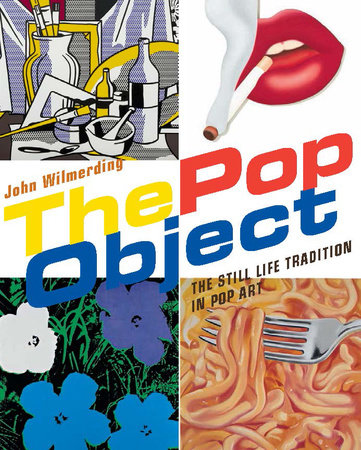
The Pop Object: The Still Life Tradition in Pop Art – John Wilmerding

This is a book produced by the curator for an eponymous exhibition at Acquavella Galleries. As such it is a big beautiful glossy refutation of the perception of still life painting as a skill building exercise or a safe way to explore new techniques. Of course there is text here, but the focus is really on the pictures, which makes it a relatively easy read compared to more theory based books.

The book starts by exploring an apparent art historical blindspot in the analysis of the Pop Art movement: the legacy of still life art and its influences on or in Pop art.

Chapter one covers the origins of the still life genre and documents the parting ways from its role on the edges of more serious subjects in art history. There is a brief discussion of some of the technical innovations, such as chiaroscuro and cubism, which were introduced in still life painting, as well as the hidden symbolism in Christian art’s still life elements. Parallels are mentioned between the prosperity of the Dutch golden age which produced so many realist still life paintings, and the prosperity of 20th century America where/when Pop Art was really ‘popularized’. The proposal is that still life conceptually comes into its own in American Pop art as a form of cultural statement by linking arms with the modern world’s focus on surface, object, commercialism and consumerism.

However, rather than illustrate the depth of significance in the pairing of Pop and still life art by taking an issues based approach to dividing the material, the book then groups and explores contributions by object type. Chapters include Food and Drink, Flowers, Housewares and Appliances, and finally Body Parts and Clothing. The table of contents reads like the aisle signs at a supermarket, so in a book about an art movement which both celebrates and critiques consumer culture, it is not the worst way to divide the contents. However it definitely establishes that the book is promoting Pop Art, not still life art.

Dividing the book categorically like this allows the author to pair images of works by Pop artists with their art history precedents, (Cezanne, Still Life With Apples and Oranges (c.1895) and Segal, Cezanne Still Life #4 (1981)) to demonstrate lineages, as well as exploring within the pop movement how the neutrality of consumer objects become a canvas on which any number of styles of representations may be made, yet still elude meaning within the representation of the particular object (Thiebaud, Four Ice cream Cones (1964), Lichtenstein, Ice Cream Cone (1963) & Oldenberg, Floor Cone (1962)).

For my own interests, I found the chapter on food, and the final chapter, Body Parts and Clothing, to be of the most interest. Pairing western consumer objectifications of the female form in Pop still life artworks with a critical perspective makes sense. So if I am struggling with some avenue of thought along those lines I will be definitely looking to refer back to this book. Otherwise, somewhat like popular culture, the book is a feast for they eyes and meant to be enjoyed for its surface pleasures, rather than complicated meanings.

How To Prepare Your Art For The Show.

Well the 2022 Calgary Stampede Western Showcase is a little over a week away and I have six oil paintings going into the show! So the task now is to make sure my art is show ready.

So what goes in to getting art “show ready”?

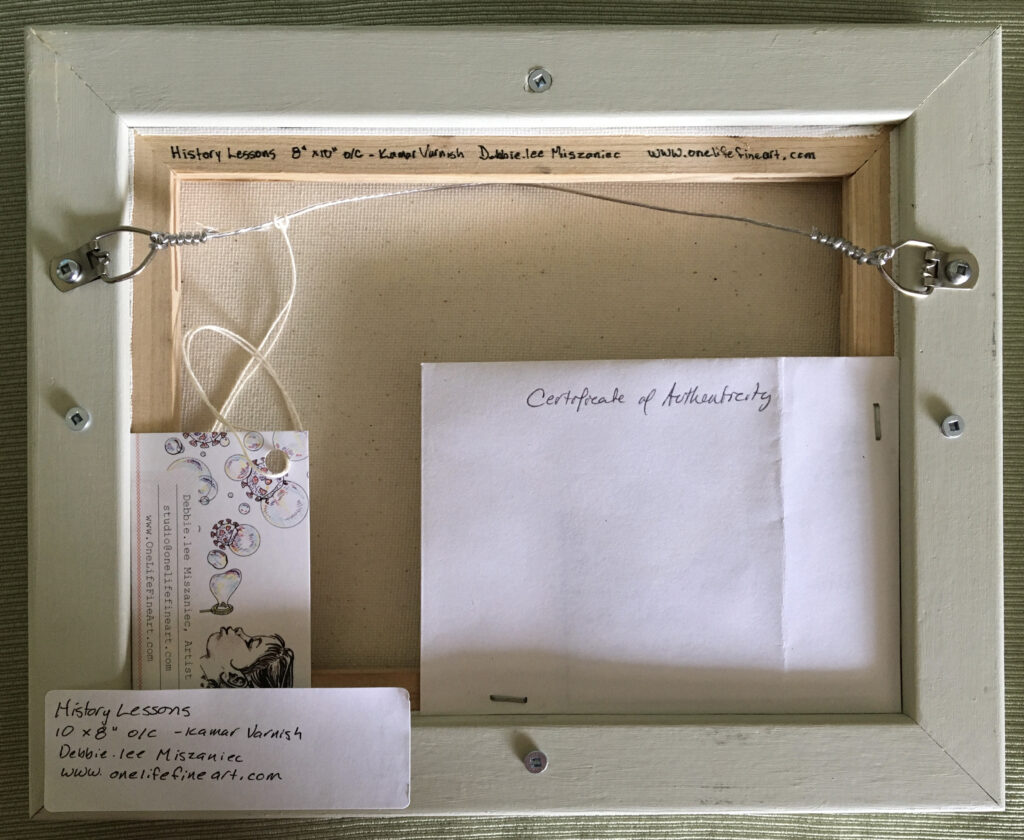
Painting finished, varnished, framed & ready to hang, with 3 points of identification on the back!

Well, in case you have a show coming up and are looking for tips, I’ll share my tips with you today.

  1. Finish the Art! Make sure your paintings are finished and dry enough to handle being out of the studio and in the real world (Duh, you say, but this can sometimes be a challenge in itself for the grand visionary perfectionists which most artists are when it comes to their art).
  2. Varnish: I like to give mine a spray coat of the appropriate picture varnish for protection and freshness once the paint has fully cured.
  3. Framing: Technically this is optional depending on the type of show and the type of painting, however as a former picture framer I would opt for simple framing over no framing if at all possible. First, framing is protective. It is meant to buffer the art from the scuffles it might encounter in transit, storage or display. What would you rather get damaged, the corner of the painting or the corner of the frame? Second, I have seen complimentary framing showcase good works as something truly special and play up the best qualities of mediocre work. Framing can make a big difference in the perception of the quality of art on the wall.
  4. Hanging Hardware: Regardless of whether you choose to frame or not, you need a way to attach the art securely, yet removably, to the wall. The industry standard is D-rings and picture wire, so make sure your paintings are wired properly before they leave the studio.
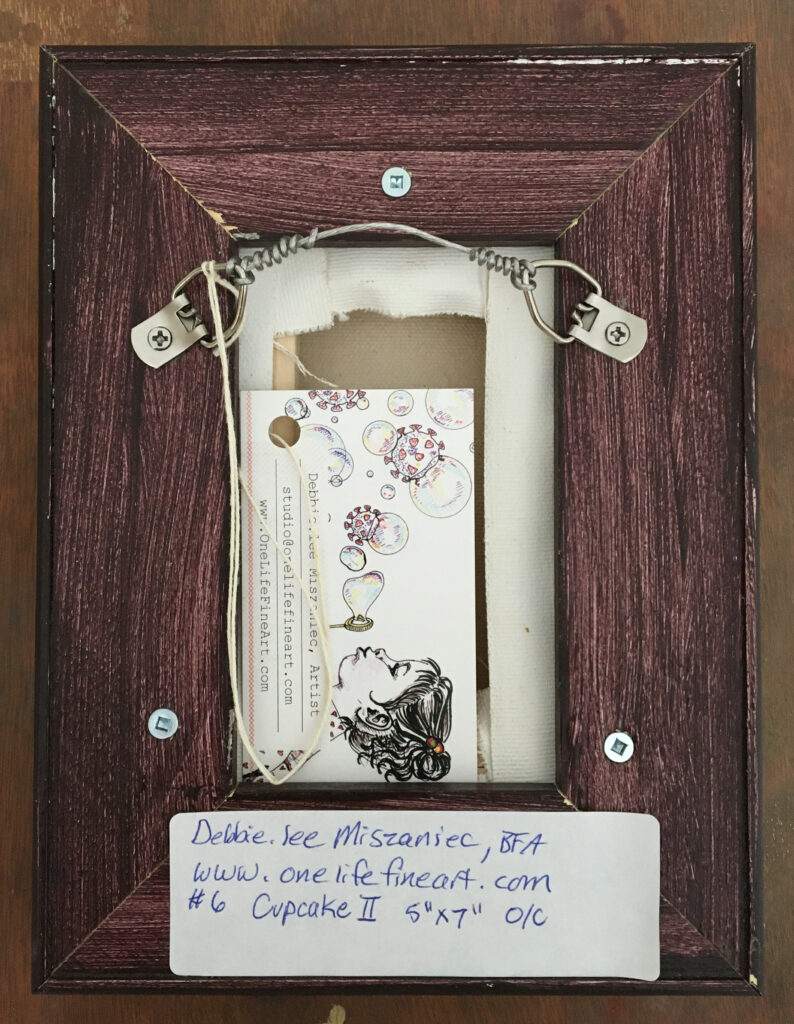
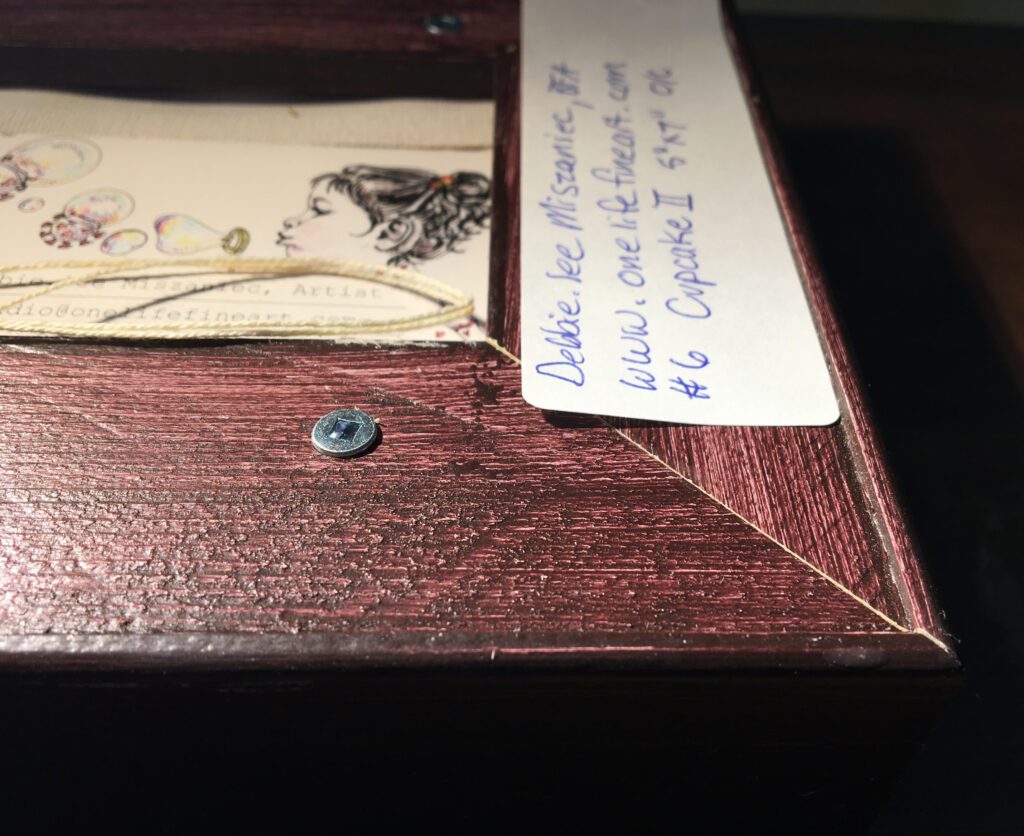
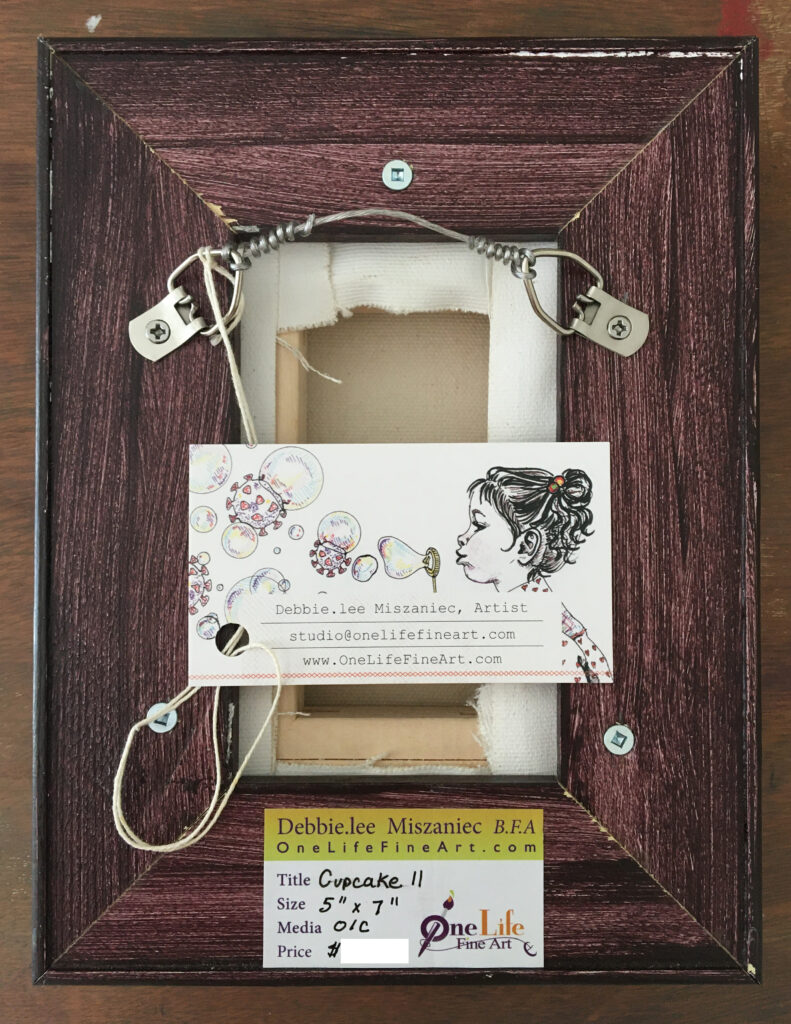
  5. Identification and Information! Ever struggled to read an artist’s signature on the front of a painting? Having worked in galleries & frame shops, identification is a big deal. I want to know who the artist is, the title of the piece and the size (the framer in me also wants you to tell me which way is up for certain, but that is another article). As someone selling or buying the art, having the price clearly marked is handy. Finally, as the artist, clear painting identification is part of my marketing. I want the buyer to be able to see my full name & it’s correct spelling (so they can google me if it comes to that), and a way to contact me and/or see more of my work. I want them to be able to pass that information along to anyone they may know who asks about their new painting. So I include three points of identification (see the image above) and information on my paintings, beyond the signature.
    1. On the back of every painting, usually on the stretcher bar, I print my name, website address, the title, size and medium. This way, even if reframed there is a record of the artist and art.
    2. I repeat this information on a desktop printer label adhered to the the back of a business card attached to the wire of the frame. This is great because the card can be kept or later used to pass my contact information to a buyer’s friends.
    3. I repeat this information a third time, but with price now, on a label adhered to the frame back (or if unframed to the painting’s back). StickerCanada sent me these custom uncoated paper stickers with extra strong adhesive, and so far I LOVE them in comparison to the desktop printer labels. They are the correct size for my frames, professional looking, legible at the small size, and customizable with just a regular ball point pen (no smearing with a regular pen, but my felt pen smeared a little). My favourite thing about them though, is that they actually STICK! Desktop printer labels do not adhere reliably to canvas, stretcher bars or wood frame backs. Ideally the labels would stick for as long as the buyer owned the painting, and reasonably they should stick for the term of the show. However, frequently they begin to detach hours after being positioned, even with burnishing. It is not terribly useful if your identification and marketing ends up lying on the floor somewhere beneath your painting during a show. So, StickerCanada’s option to get extra strong adhesive on their uncoated stickers is much appreciated.
  6. Package for shipping: This will depend on how you are shipping the works. I have never had to build wood crates for shipping, fortunately. However you really do need to think about how you are getting the art to its destination and what challenges that might involve along the way. Keep them dry, insulated from climate, and isolated from abrasion, compression or impact. When putting them in the hands of a regular shipper, I layer the art in the centre of a system of cardboard, styrofoam or foam core, bubble wrap and glassine paper. When transporting them myself (locally) I can get by with just cardboard corners and stretch wrap on the paintings. I place them back to back or front to front in an appropriately sized cardboard box. The paintings shouldn’t be jammed in tightly, but neither should they be able to shift or jostle in the box. I can then either take the packaging with me or leave it with the show organizer, although I would prefer if they utilized it for safe storage too.

So there you go, my experience on preparing art for a show. But, different art might need different preparation. So what are your tips?

Resolutions 2022: Of Art and Health.

It is February so by now most of us have made our New Year’s diet/health resolutions and have either made strides toward fitness or given up until the threat of swimsuit season looms.

Not yet titled. 8″ x 10″ oil on canvas. 2021. Debbie.lee Miszaniec

Amoung my resolutions, maintain a healthy weight, make more art. The first is an ongoing struggle for me, having lost nearly 38% of my body weight to reach the top end of my healthy weight range. I know I have sustained metabolic damage, because it should not be such a struggle to stay in that range. However, since we are talking about my health, rather than merely my vanity, I feel the reward to be worth the unceasing effort.

I’m a big believer in having goals that support each other, but those last two can work against each other. Art making is a very sedentary endeavour. Even though I stand while painting, which is much better for the body, I barely make 2000 steps on a studio day without taking intentional exercise.

A few ideas for getting more exercise in the studio:

  1. Stand – you’ll move back and forth from the art more often at least
  2. Aim for inefficiency – store things farther away so you have to walk farther to get them.
  3. Tidy frequently – put things away between uses so you have to walk back and forth to get them again
  4. Work ‘en plein air’ – nothing like hiking through nature with your kit over your shoulder to boost steps
  5. Work big – climbing up and down a ladder to work on a painting incorporates a lot of movement
  6. Take walking breaks – Studies have shown we think better when we are walking.
  7. Make your art your health – incorporate your health journey into the work you are making.

I think this last one is possibly the hardest to do in a simultaneously earnest and yet critical fashion. The art could verge into documentation. What elevates it from that? And are you interested in focusing your creative production that way? For most artists the answer would be no, and understandably so.

The work I am moving forward with in 2022 is drawn from my own health journey. The art and my concerns, struggles and efforts toward maintaining good health are entwined. It is not something I originally intended; the realization of this emerging influence in my work came to me like a flash of light illuminating what I could not previously see happening in my art practice. I decided that if my art was being unintentionally coloured by my health journey, it would be better and more interesting to investigate that, rather than attempt to deny or purge it. Since then it has been a slow and ‘feeling my way in the dark’ type of growth, interrupted by other projects, including a global pandemic. This new direction in my work is one which questions, empathizes, and seeks insight.

However my ongoing research has given me so may connections and avenues to explore as I understand where health, evolution, body acceptance, vanity, subconscious desire, diet industry and patriarchal pressures intersect in my own personal weight loss journey, that I am excited to see where this new artistic journey takes me. I hope you will find that direction satisfying as well.

Why An Artist Should Write Project Grant Proposals (even if you never get one).

I just spent the last week after taking down our exhibition for the Medium of Exchange Collective show, Process, writing a project grant proposal. It’s the second one I’ve done this year and I will likely write at least one more. I have probably written one a year for the last 10 years. Although I am getting faster they still take me a while to write, and I have never gotten one.

So, given my terrible track record (no one is going to be hiring me for grant writing services anytime soon) why would I continue to write them?

Once upon a time I wrote them for big projects that I could not accomplish without taking time off from my day job. So they were always written for projects to start after the adjudication process, as I’d have to know if the project were funded before I could commit to doing it. Then one day I decided I was tired of leaving the fate of my projects in the hands of strangers.

I decided to write a grant for a project I was going to do regardless of the results of the application. In fact, I wasn’t even going to wait for the results, I was just going to write it, submit it and start working on the project. And guess what? Did I get the grant? Well, I’ll just say that the project is complete and the jury is still out on the grant, BUT the tortuous process of writing a grant proposal really helped me clarify what I was doing, why I was doing it, and how I was going to do it.

I really thought through what I was capable of doing both in terms of time and finances given my current circumstances, and what level of risk or sacrifice or economization I was willing to take on without compromising myself or the project. Simply put, the project had a better chance of not going off the rails midway due to anything that I could control (as we know from the last year there are circumstances which one cannot control, such as pandemics).

The result was that my project went smoother and faster, and the results were more impactful, because I wasn’t second guessing myself or wandering down the garden path anymore, but executing the decisions I had already weighed before hand.

That is not to say that once defined there is no room for inspiration, but the big picture is in place and everything else needs to fall in line to support that big picture. If the inspiration better supports that big picture then I could by all means follow it.

So this is why I am saying that artists should write project grant proposals, whether or not they ever get one. We only have so much time to make our visions real, whether that time be spent making or waiting. Taking the time upfront to really define a project, think through and explain the value of it, work out the logistics of it, can only enhance the outcome of the project. If the grant application looks weak even to you, maybe the project should be rethought. And hey, if you actually get the grant, all the better.

Am I the @$$hole?

So there are a lot of things artists gamble their money on, because as they say, it takes money to make money. But it is also said that during the gold-rush days it wasn’t gold miners, but merchants that ultimately cashed in on the dream.

So a bit under a year ago I was approached by an individual starting up a website promoting local art and artists to those interested in buying local during this time of Covid induced closures and cancellations of the traditional venues and events for art purchases.

The website offered Basic and Premium listings. Basic listing were free, with artists listings found under media categories. Each listing included a bio, an art image, a headshot and contact information. Premium listings (I don’t recall what the subscription cost then) were ‘featured’ by name with a headshot on the first page and had more than one artwork image.

Because I have never had a sale come through any sort of art hub website like that (and I have been listed on a few both big and small) I was not interested in the paid membership. Perhaps if I did not already have an established web presence, having a paid listing might make sense, but even so at that point in a new venture there is no guarantee that a paid membership would see any return on investment. While I figured there was no harm in a link to my site from one more source (as it wasn’t going to cost me anything) I joined with no illusions about the situation that would likely develop by having two levels of membership; those who paid would be more prominently displayed, thus reducing the chances that free listings would get much traffic from the website. Traffic to the website would have to be extraordinarily high to see see much overflow to the Basic listings.

So fast forward to now, and as expected I have seen no traffic, let alone income, coming my way from my Basic free membership. In fact, I had pretty much forgotten about the whole thing when I got a message in my inbox letting me know the site had been a marvellous success with media coverage and artists reporting sales and commissions.

In light of this success the organizer needed to raise membership rates to continue promoting and make the website sustainable. Basic (free) would still be Basic but at $120/yr (special promo $100 for existing members), and Premium would now be $250/yr ($100 for existing members), and there would now be a new Super Premium membership of $750/yr.

Now, I’m aware that these membership rates might seem low to some of you out there, however one of the reasons I have been able to keep making art through good times and bad is because I keep my expenses low, and my financial risks small. I am always looking at return on investment, while balancing that against any other less concrete benefits an ‘opportunity’ might offer.

So I considered the rate increase for about a week and came to the conclusion that to pay for the Basic membership, given the traffic that had come off it in the past year, would be a waste of money for me. I let the organizer know that in light of the rate changes, and lack of traffic from that quarter since joining, I was discontinuing my membership. The organizer responded by telling me that it was predominantly premium members who had seen traffic and sales, and so I might like to upgrade to a premium listing.

Good on the organizer for trying to turn a No into a Yes! But…

As I thought about upgrading from Basic to Premium it occurred to me that introducing a Super Premium membership ($750/y) to the mix would now bump down Premium listing to being as effective as the Basic (free) ones had been, and the Basic one to being equivalent to a donation. So really the choice was Super Premium or don’t bother.

For this amount I want to see some concrete numbers from the site, like, what have been the average sales numbers for the premium members, and how often and at what price points? How about some information courtesy Google Analytics about traffic, demographics, new and return visitors, conversions, all that? Of course that wouldn’t guarantee me the same results, but it would indicate what is achievable, or reasonable to expect from my investment assuming I am an average artist of average output and capabilities.

What numbers would I consider reasonable? It depends. I’ve been to many art fairs where artists tell me on the final day that they have “about broken even,” and I think to myself, “well then why even bother when you could have broken even staying home?” Now with a website vs. an art fair break even might be okay given the smaller outlay otherwise, but one would still want to see evidence of growth potential. All the same, I might consider trying a show with an uncertain track record and a low booth fee if the traffic were good in order to gauge interest in a new body of work, but the higher the booth fee the more certain I have to be of a reasonable chance of returns.

So back to the ‘opportunity’ at hand, I responded that I did consider the upgrade however I would need to see some sales figures to decide whether to do that or not, and if the organizer could provide those numbers in the future I would love to hear more. I thought that was a nice way of explaining my concerns but leaving an opening to be convinced. After all, I can only make a decision based on the information I have, so if the organizer has information that can help me make a better decision it would be profitable for them to share it. However I didn’t particularly expect to get a response since I think getting sales figures could be problematic as the organizer would have to rely on artists volunteering that information.

So I was surprised, and more than a bit dismayed, to get this response a day and a half later: “All I will give you as a free member is the information I already gave you. Premium members, paid members, get the benefits.”

So, wait a minute, does this mean you have information that would help me better make my decision but you will only provide it if I sign up for a paid membership? Quite the sales pitch! (and by the way, is this indicative of the treatment I will be paying for once my free membership becomes a paid one, as it is still their bottom tier, Basic, not Premium?)

I hope that is not what is being said here, because, aside from coming across as rude, it makes me suspect that I won’t like the numbers when they are provided, which is why the organizer wants me to sign up before providing them. If that is the case I am happy to be parting ways with this website.

But what do you think? Am I the @$$hole for asking for more information before putting my faith and my money into the relationship?
Tricks & Treats: October Review

Trick or Treat, 12″x16″ o/c, $950

So Halloween is over and we have 2 weeks to see where it takes us in regard to new Covid-19 cases. Trick or Treat is my latest instalment in the Covid Chronicles saga of paintings this year. I was quite anxious about this holiday, it is so hard for us to disappoint the little ones, but no one can be sure who is passing along the Covid Apple in this rendition of a Halloween Snow White fairytale. Is the little old lady giving it to Snow White, or the other way around? Is the child transporting it from one house to another (all unintentionally of course)? It was good to see all of the creative approaches people took to carrying on with Halloween traditions this year, I hope it works out for us all. Trick or Treat is available for purchase. If you are interested in the original or prints definitely get in touch!

This month I put together a few short videos on completed paintings which show the stages through which each painting passed to reach completion. The first of these (above) documents Happy Birthday 2020, my last Covid-19 painting, along with my approach to the genre of Memento Mori painting.

And here are the Treats:

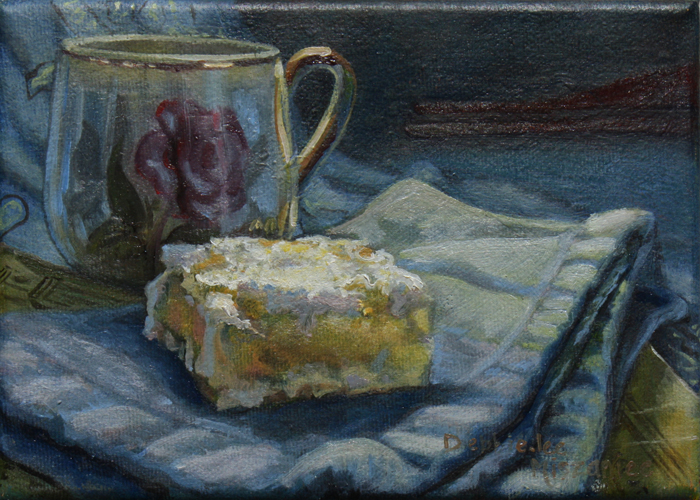
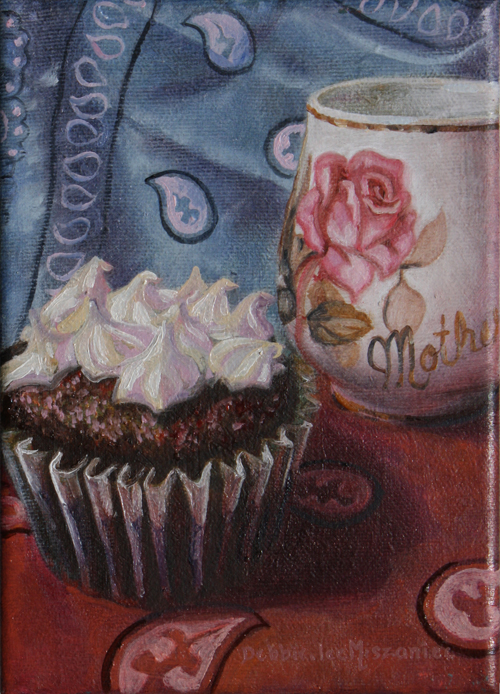
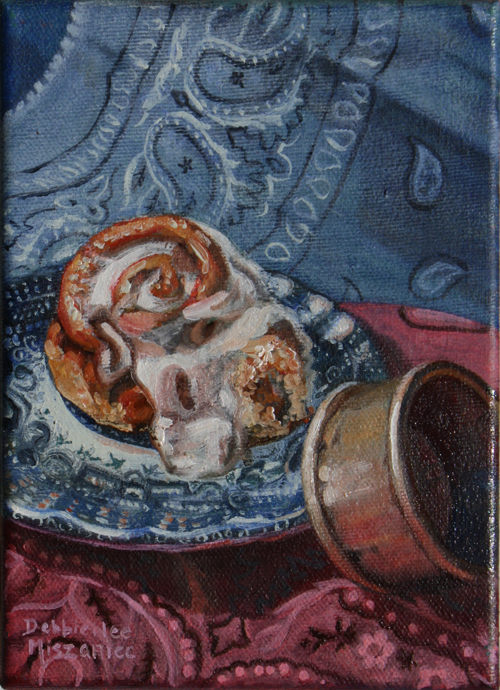
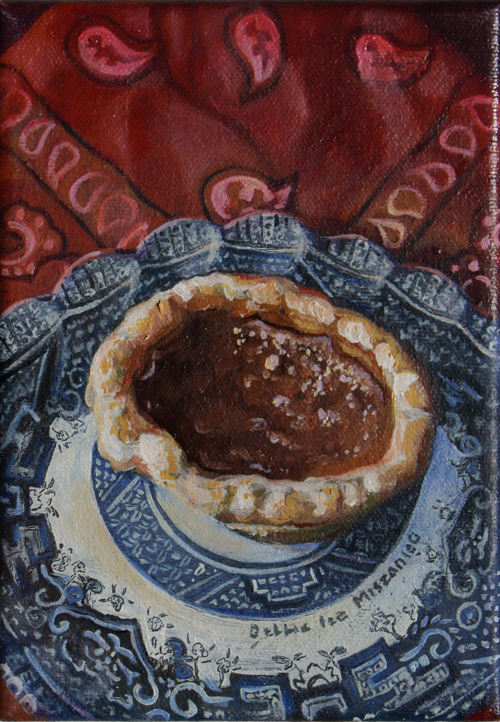
This month I completed three new Cravings paintings, as well as updating the Cravings Gallery with prices and sizes. There are no PayPal buttons yet, so if you are interested in purchasing a painting just pop me an email or fill out my contact form. I’ll get in touch and we can make arrangements.

Each of the paintings introduces its own small narrative along with my intense appreciation of these nostalgic sweets. I enjoy the associations each brings with the past, the present, the future, and the appreciation of the here and now, the moment and being present in our bodies, appreciating each moment life gives us.

Below you can find progression videos of each of the three new cravings paintings. What do you think of them? They are all around a minute long, (so no need to worry about time commitments). Leave me a comment on my channel, I’d love to hear what you have to say.

Art of Home Studio/Office & Pandemic Dressing

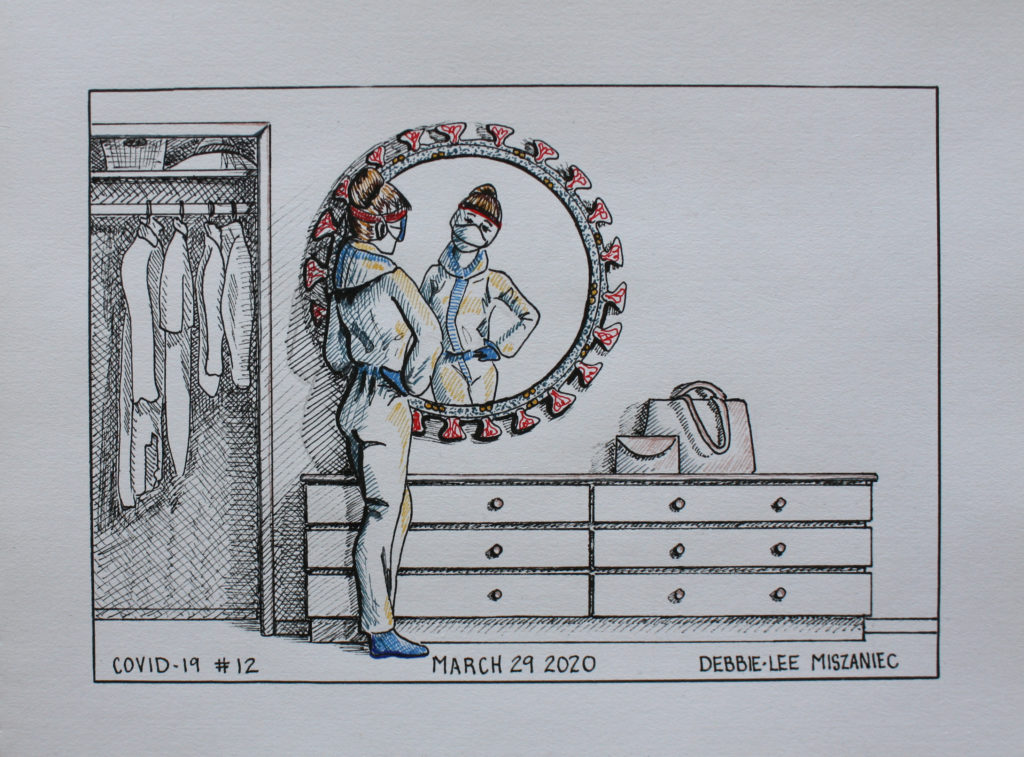
Covid 19 #12 Original Ink Drawing, 299

Fashion is a little off my normal range of topics, but I will let you in on a little secret: I have always enjoyed fashion and style. Expressing myself through fashion is another avenue for creativity. When I was a teen deciding what I wanted my life’s work to be I even considered entering the fashion industry. Now I mainly enjoy learning about new systems of dressing, following what is coming across the runways, planning my seasonal wardrobe switch and helping friends and family organize their wardrobes. So it was lovely to read this article where I found an intersection between this interest and my own current work (above).

I was reading this article from the Gaurdian today about how fashion is adjusting to the work at home shift that the pandemic has brought along, and apparently it is not all tracksuits and crocs:

https://www.theguardian.com/fashion/2020/sep/25/i-miss-the-buzz-of-an-office-wearing-something-cheerful-perks-me-up-the-rise-of-the-domestic-goddess-20?utm_term=7cda6c105b2794b7bb246e1fb1f2e659&utm_campaign=FashionStatement&utm_source=esp&utm_medium=Email&CMP=fashion_email&fbclid=IwAR1BA_Z14RsyCFNnFzNOhVKH6ed1DIvwNhwflG0YDxP72fhBPD9u7_2ob4A

I have been working almost exclusively from my home studio since well before the pandemic, but even I have noticed a change in what I want to wear:

I’ve always had a special hate on for overly silly fuzzy house slippers. I’d like to have something for the home office that does not look like I’m down for a netflix/popcorn/P.J. binge, but don’t like the idea of wearing street shoes in the house either. Maybe it’s a Canadian thing, with our dusty/slushy/snowy streets, but when I walk in the door I take off my shoes. Now maybe I’ll be able to find something a little more polished to wear in the home office/studio.

This leads to my second issue with home office dressing, pants designed to be worn with shoes with a heel look silly dragging around the house on the ground. So most of those long loose flowy (& leg lengthening) trousers are out of the question. I also used to do home art parties (a cross between tupperware parties and paint nights), and this was an issue for that context particularly, as I was now presenting in front of the client. As I said maybe it’s a Canadian thing but its considered polite here to take off your shoes in someone else’s home (or at least to ask). So how to look professional while leading a painting party in someone’s home? My solution was black ankle pants and plain black socks. A professional looking slip on shoe (maybe even with a wedge heel) with soft non marking soles would have been fantastic!

Speaking of heels, The pandemic has raised my resistance to wearing anything other than a flat shoe even out and about professionally. Also last winter’s uniform of form fitted mini dresses with statement leggings and accessories seems too aggressive for the soft relaxed vibe I’m craving now. This season I’m leaning more toward mid length dresses with an a-line shape that I can belt at the waist for definition. Of course I’m wearing what I have first before shopping, but how I feel about what I have has changed so I may be wearing it differently than last year.

Another issue that the pandemic has brought forth for me is something I hadn’t anticipated. You know that feeling you get when you have put together a particularly good outfit and you are looking forward to getting out in public where it can be appreciated? I suppose you could call it a peacocking impulse. Well I am missing those opportunities to peacock a little. Sure it gives me a boost to dress well for myself, but positive feedback is great too.

How about you? How has your sartorial sensibility changed over the pandemic?

The drawing above is available for purchase at https://onelifefineart.com/index.php/covid-19-chronicles/ #covid19fashion #covid19art

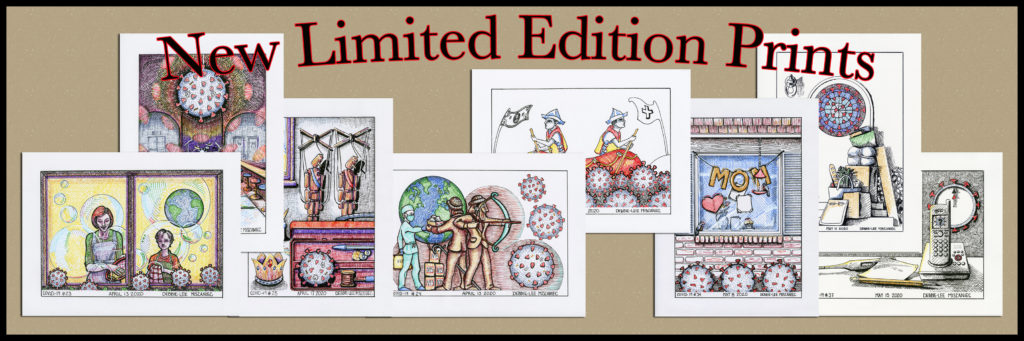
Limited Edition 100: means I won’t produce more than that (I may produce less, or none).

The pre-order period for the most recent Covid-19 images is nearly up, 9 days (July 19th) until it closes. Now is the time to add to your collection.

All people ordering before July 19th will receive a free 11″x17″ portfolio of the final 19 drawings. So that’s a great reason to purchase your drawing, print, book, zine or cards now. After the pre-sale that portfolio will be 15$ plus shipping, while quantities last.

I mean, you can wait until whenever to try to order some of the print pieces, some will be available, but some will not. If there are no orders of the object of your desire during the pre-sale then I won’t produce it (unless you want one of the original drawings, in which case when it’s SOLD, well it’s gone, right?). If more people order the item then I will produce it, plus a few more than ordered, and you can likely still get it (while quantities last) after the pre-sale.

That said, it could happen that I re-open an edition again, up to that maximum number (if the stars are correctly aligned), but that’s not much of an assurance of future availability for you is it?

So that’s my rather lame sales pitch, if you want a limited edition print, book, ‘zine, greeting cards, post cards, or portfolio, order it now or risk missing out.

Thanks for supporting us small scale artists doing our best to earn a living while providing fresh perspectives on the big and little things in life!