Author: DebbieleeMiszaniec

Canadian visual artist.

New Painting: Idealized Figures

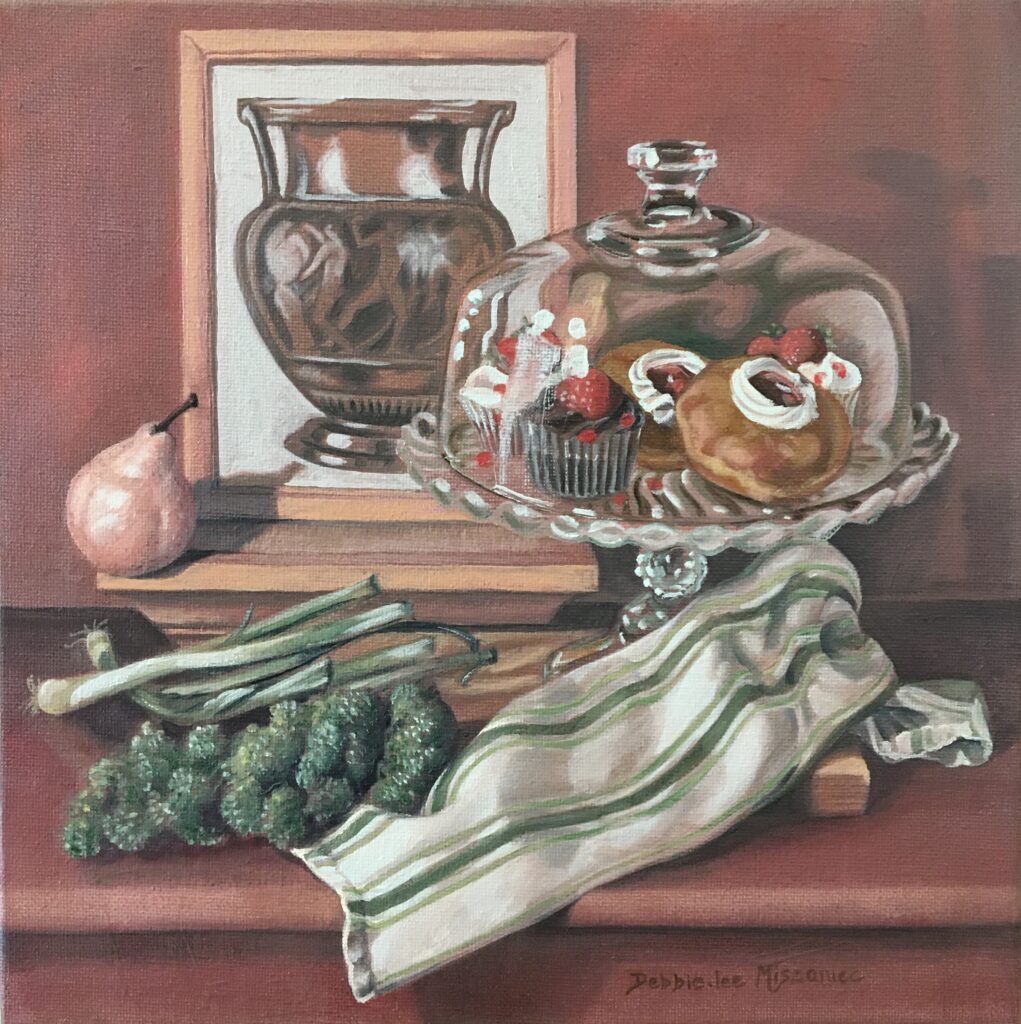
Idealized Figures, 8″x10″ O/C, $450 Unframed

Meet Idealized Figures, one of the newest paintings in my series exploring the relationship between a little pink pear and a cake plate of jelly doughnuts. I was working on correcting and straightening some of the lines in the painting, when it occurred to me that this is what we do in life too; with our diet practices we attempt to correct nature and idealize our own forms. With this insight I decided to emphasize my correction lines in the painting.

New Project Announcement! Earthly Delights – 10 Still Life Paintings in Places

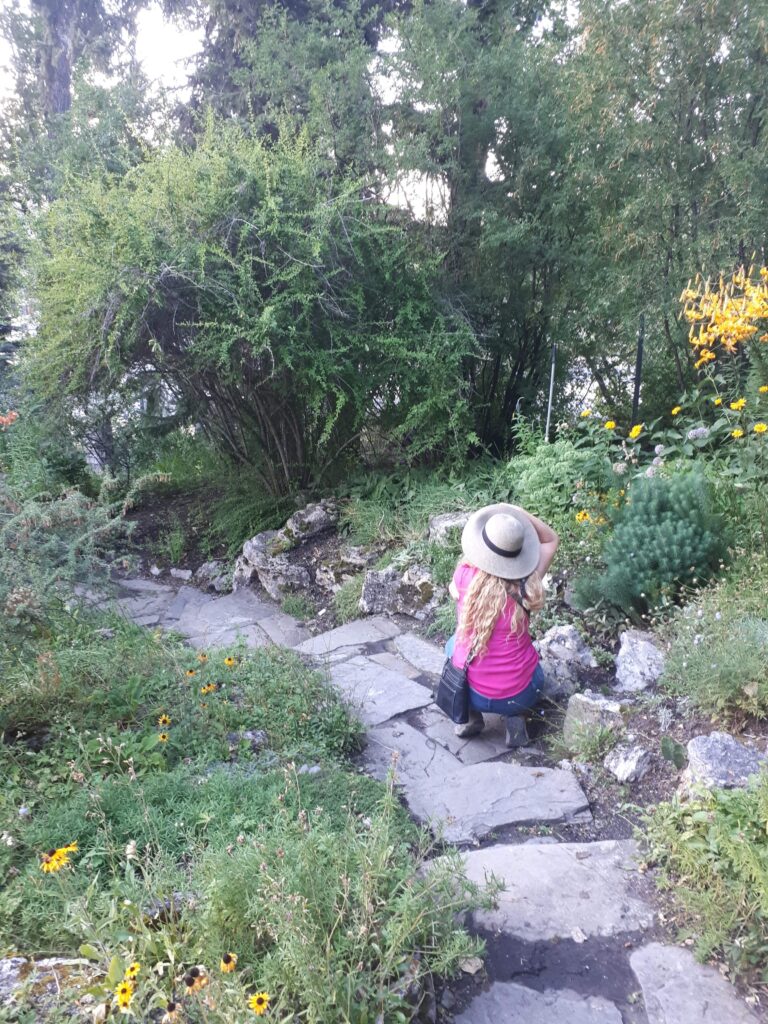
I’m on location here taking reference photos at Reader Rock Gardens in Calgary for my new project, Earthly Delights – 10 Paintings of Food in Places, funded by an individual artist project grant from Calgary Arts Development.

As some of you know from reading earlier posts about the development of my Cravings series, I (intentionally) lost more than a third of my body mass in the last decade. Despite the many health benefits, there are other physical and psychological results of this journey which continue to make maintaining a healthy weight a challenge.

Earthly Delights is about exploring that journey through the genre of still life painting. This project juxtaposes the still life within places to speak to the dilemmas presented by our cultural fascination with food, health and body image.

If you have a story to share about your own experience with health and diet culture, I would love to hear from you

Stay tuned to see the development of the project here, on my Facebook and Instagram channels, or subscribe to my Newsletter!

At the completion of this project I will be proposing exhibition opportunities for Earthly Delights. If you represent or know an organization which would be interested in exhibiting the work publicly make sure to get in touch with me.

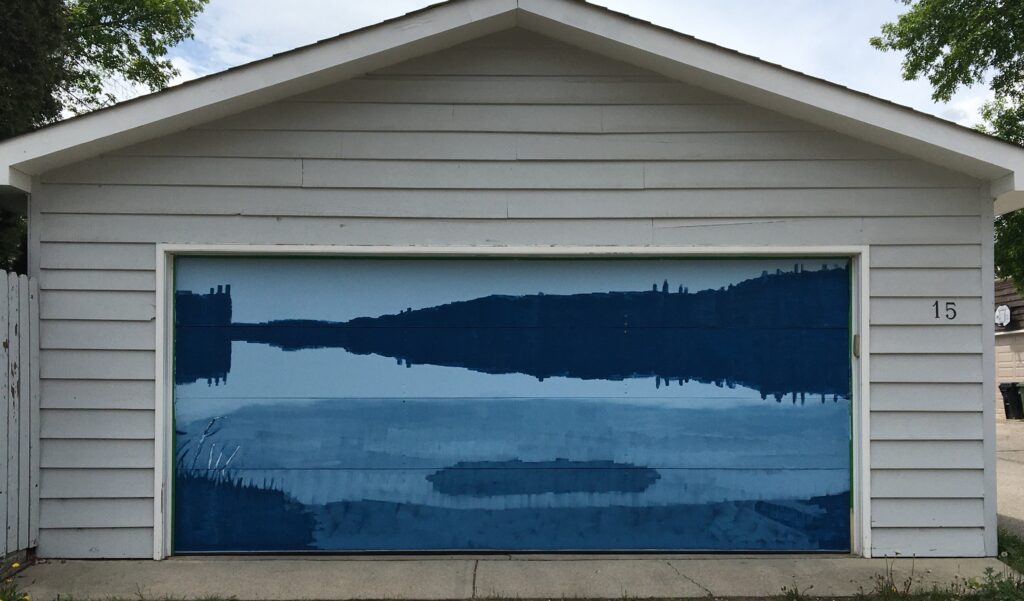
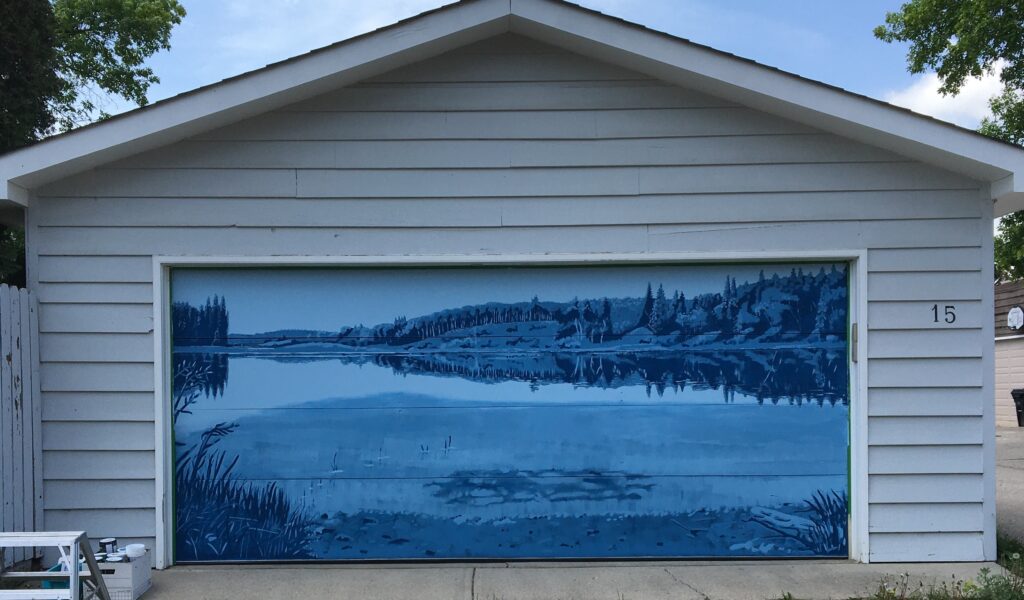
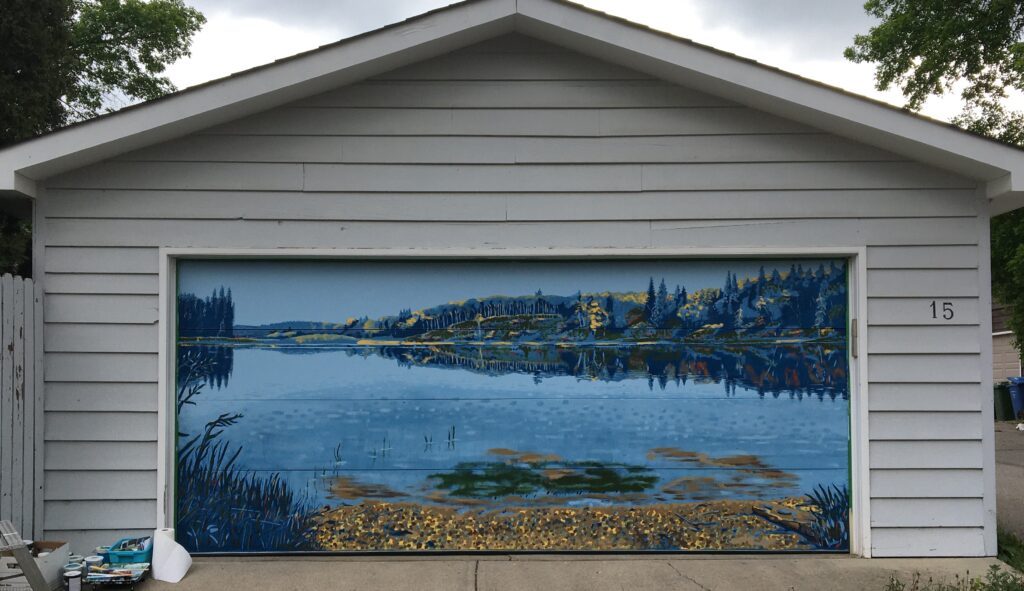
I Painted A Serene Lake Scene On My Garage Door!

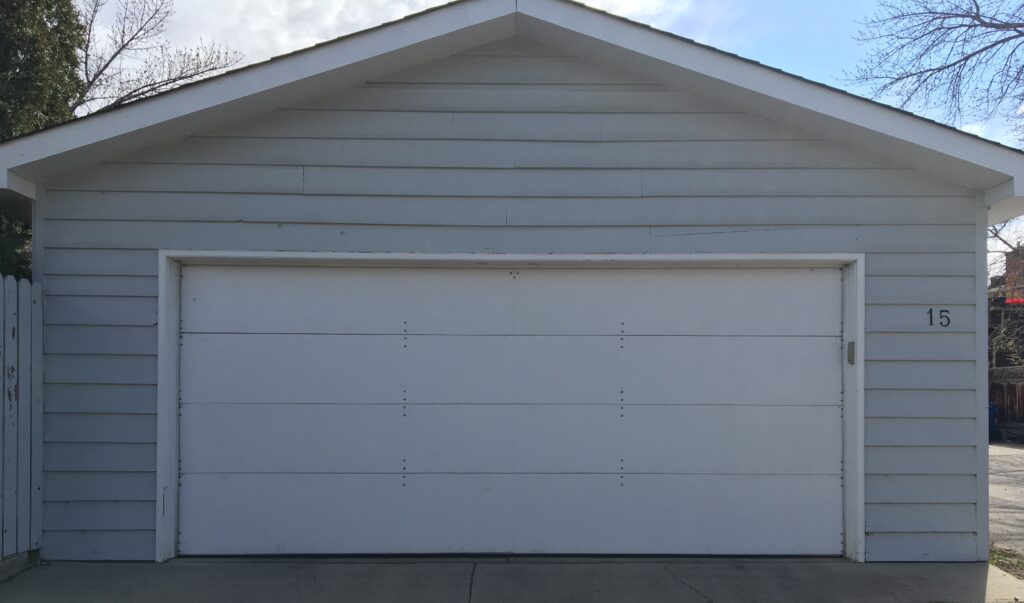
Sawmill Lake, 8’x16′, exterior mural on wood garage door, 2022.

Early this summer I painted this exterior mural on the new garage door my husband built and installed last year. It was his idea to do a mural on what looked like a big blank canvas to both of us, and with that sort of faith in my abilities, how could I decline the opportunity right?

The image we chose was from a recent visit to the lake country around my husbands childhood home. This was a small local swim and camping spot walking distance from his home. You can see our grown up kids in the picture, but I opted not to include any figures in the painting.

Neighbourhood response was so positive to this mural that I have decided to open up possible bookings for garage door murals for next summer. Prices would start at $2500 in Calgary. I would only have a few slots available, weather dependant, so if you are interested in getting a mural done, make sure to touch base with me early in the new year to reserve a slot.

Recent Reads: The Rhetoric of Perspective

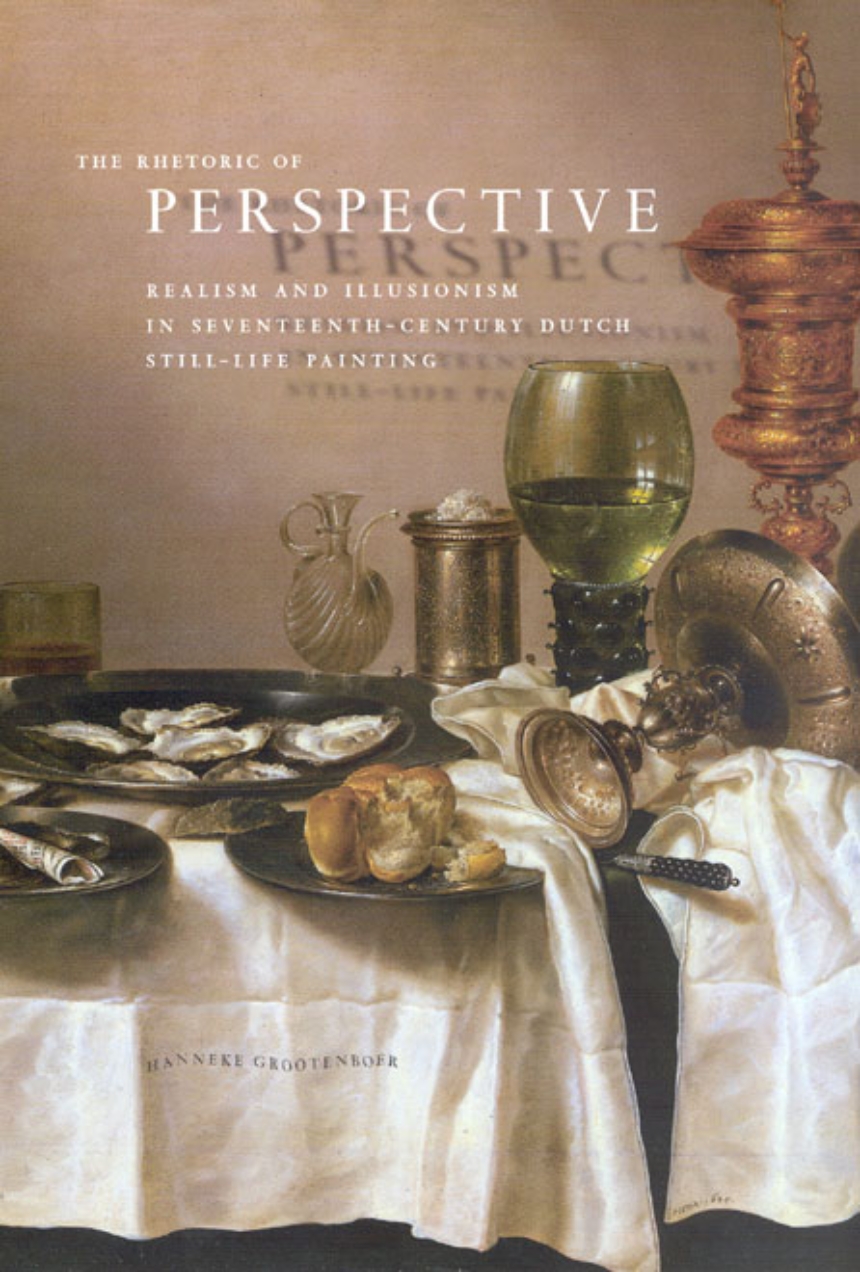
The Rhetoric of Perspective: Realism and Illusionism in Seventeenth-Century Dutch Still-Life Painting – Hanneke Grootenboer

Warning, do not think this is a light Sunday read! So this book is a dense one, with a lot of reinterpretation of language to draw connections between disparate writings of art historians and philosophers. However, as I’ve been fascinated with the 17th century Flemish still life painter Clara Peeters, and it had a picture of a dutch still life painting on the cover, I had to commit to read this book fully. I over-ran my renewals at the library on this one but I made it.

Essentially she goes through many convoluted arguments to prove that painting is a form of thought. Well duh, I thought, ask any artist and you will get that answer. I think through art. Not while making art, well that too, hopefully, but through making art. That is why a painting is never merely an execution or illustration of an idea for me. It is an organic thing that shifts, changes and offers new discoveries along the route to completion. It is a discussion, which I initiate, but does not always go in directions I expected.

However despite not requiring her proofs, I gained a great deal from reading them. Of course I was familiar with anamorphism in painting (The Ambassadors (1533), Hans Holbein the Younger), however her exploration of its many iterations lead me to think about the possibilities of incorporating anamorphism into my paintings. Watch for that.

I was also enchanted with the idea of the painting looking back at us, the missing perspective which can be seen illustrated in paintings of reflective surfaces that sometimes depict the artist or the room beyond the painting.

I became fascinated with an idea, which might be my own mis-interpretation of her text, that the blank space behind a breakfast piece might function as an implied mirror. In the book she uses the example, The Holy Family (c.1513) by Joos Van Cleve, paired with Little Breakfast (c.1636) by Pieter Claesz. The former is an icon painting of Mary and the Christ-child at a breakfast table, while the later depicts breakfast items in the same order of the placement in the former; cup. knife, plate of food. However in the former the knife is placed as it would be if Mary, who faces out from the picture plane, had just used it, while in the later its placement is such to imply the painter, or the viewer had just used it. Looking at the table I realized that some of Clara Peeters breakfast pieces also resemble an inversion of that table, but with the knife switched to the side of the table that a right handed person, or Mary herself were she in the position of the viewer, would have placed it. The blank background (the author also studies the practice of painting the backs of canvases during the Dutch Golden Age) implies that the canvas surface, the barrier between us and the invented space of the picture is now on the other side of the table. Thus the breakfast piece paintings place the artist or viewer in the position of the Mary and Christ-child. If there were a mirror in that position the viewer would see herself looking back at someone in the position of the Icon at her breakfast table, thus giving quite a mental trip for a viewer familiar with religious painting: is that my reflection or am I the person that is being addressed by the person in the reflection? This led me to wonder if this reversal of view would have been recognized by the viewer, and would it have appealed to women specifically, asking them to recognize that holy state within themselves, without being as brazen as Albrect Durer when he takes the Christ pose in his Self Portrait at Twenty-eight (1500)?

This is not the authors argument, she is not interested in assigning symbolic meaning to the still-life, in her opinion there have been plenty of art historians who have examined still life looking for messages in the states and varieties of fish, flowers and fruit depicted, and plenty who have found Dutch still life resistant to meaning altogether. Her interest seems to be mainly that the blank space behind the still life, as an arrangement of apparently insignificant objects, is a deliberate relocation of the picture plane, drawing attention to the missing perspective of the painting which looks back at us. If this is the case perhaps Dutch still life painting marks a debate, and a transition in the perception of the place of power within a painting, that of the object painted or that of the painter/viewer?

In the tradition of Icon painting it was perceived that in some ways the depiction and the thing depicted were somehow connected, so the icon depicted as looking back at the viewer from the picture space could be seen and addressed by the viewer. The viewer could appeal to the persona depicted, who would then intercede with the deity. Icons were periodically destroyed throughout history for violating biblical proscriptions against idolatry, or the fear that people would worship the picture of the holy figure rather than using the images as tools to facilitate worship. So a still life painting which draws attention to the paintings surface as a barrier between a natural world and a super-natural world which returns our gaze is not really devoid of meaning, though they may not give their meaning clearly. Sometimes dangerous messages need to be hidden, as the author explores in her discussion of anamorphic art. Still life paintings of ordinary breakfasts, purporting to be un-observed, may be a form of iconoclastic art, spiritual art which incorporates the divine into the mundane, or may even debate the existence of a divine at all.

This is all inspiring for me when thinking about possible connections between the image of food in art and gender, now and historically. While it took me a while to make it through this book I think it is a worthwhile read. I am sure that there is enough here to sustain any number of interpretations and inspirations for artists working within the still life genre or within painting generally.
Recent Reads: The Pop Object

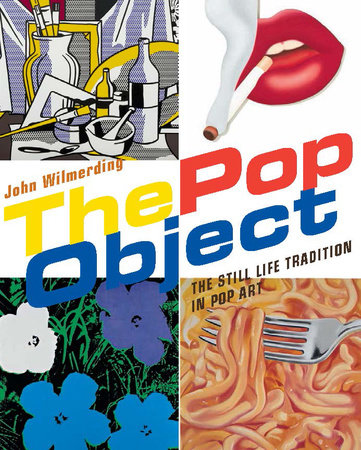
The Pop Object: The Still Life Tradition in Pop Art – John Wilmerding

This is a book produced by the curator for an eponymous exhibition at Acquavella Galleries. As such it is a big beautiful glossy refutation of the perception of still life painting as a skill building exercise or a safe way to explore new techniques. Of course there is text here, but the focus is really on the pictures, which makes it a relatively easy read compared to more theory based books.

The book starts by exploring an apparent art historical blindspot in the analysis of the Pop Art movement: the legacy of still life art and its influences on or in Pop art.

Chapter one covers the origins of the still life genre and documents the parting ways from its role on the edges of more serious subjects in art history. There is a brief discussion of some of the technical innovations, such as chiaroscuro and cubism, which were introduced in still life painting, as well as the hidden symbolism in Christian art’s still life elements. Parallels are mentioned between the prosperity of the Dutch golden age which produced so many realist still life paintings, and the prosperity of 20th century America where/when Pop Art was really ‘popularized’. The proposal is that still life conceptually comes into its own in American Pop art as a form of cultural statement by linking arms with the modern world’s focus on surface, object, commercialism and consumerism.

However, rather than illustrate the depth of significance in the pairing of Pop and still life art by taking an issues based approach to dividing the material, the book then groups and explores contributions by object type. Chapters include Food and Drink, Flowers, Housewares and Appliances, and finally Body Parts and Clothing. The table of contents reads like the aisle signs at a supermarket, so in a book about an art movement which both celebrates and critiques consumer culture, it is not the worst way to divide the contents. However it definitely establishes that the book is promoting Pop Art, not still life art.

Dividing the book categorically like this allows the author to pair images of works by Pop artists with their art history precedents, (Cezanne, Still Life With Apples and Oranges (c.1895) and Segal, Cezanne Still Life #4 (1981)) to demonstrate lineages, as well as exploring within the pop movement how the neutrality of consumer objects become a canvas on which any number of styles of representations may be made, yet still elude meaning within the representation of the particular object (Thiebaud, Four Ice cream Cones (1964), Lichtenstein, Ice Cream Cone (1963) & Oldenberg, Floor Cone (1962)).

For my own interests, I found the chapter on food, and the final chapter, Body Parts and Clothing, to be of the most interest. Pairing western consumer objectifications of the female form in Pop still life artworks with a critical perspective makes sense. So if I am struggling with some avenue of thought along those lines I will be definitely looking to refer back to this book. Otherwise, somewhat like popular culture, the book is a feast for they eyes and meant to be enjoyed for its surface pleasures, rather than complicated meanings.

Collaborating with Kitchen Feminism: Not Enough Cubicles Here

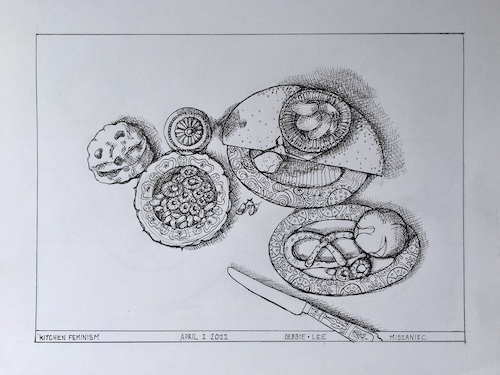
Starting from the observations of writers that women’s roles have been in some ways rolled back to the expectations of an earlier era due to the effects of pandemic lockdowns and school closures, the Kitchen Feminism project asked a diverse group of women to reflect on the ways they perceived their own lives to have been sent back in time by the pandemic:

Mom I need this space for my zoom meeting!
From the Kitchen Feminism Project, courtesy producer Dawn Van de Schoot, photographer Shannon Smith and stylists Nicole Does Makeup.

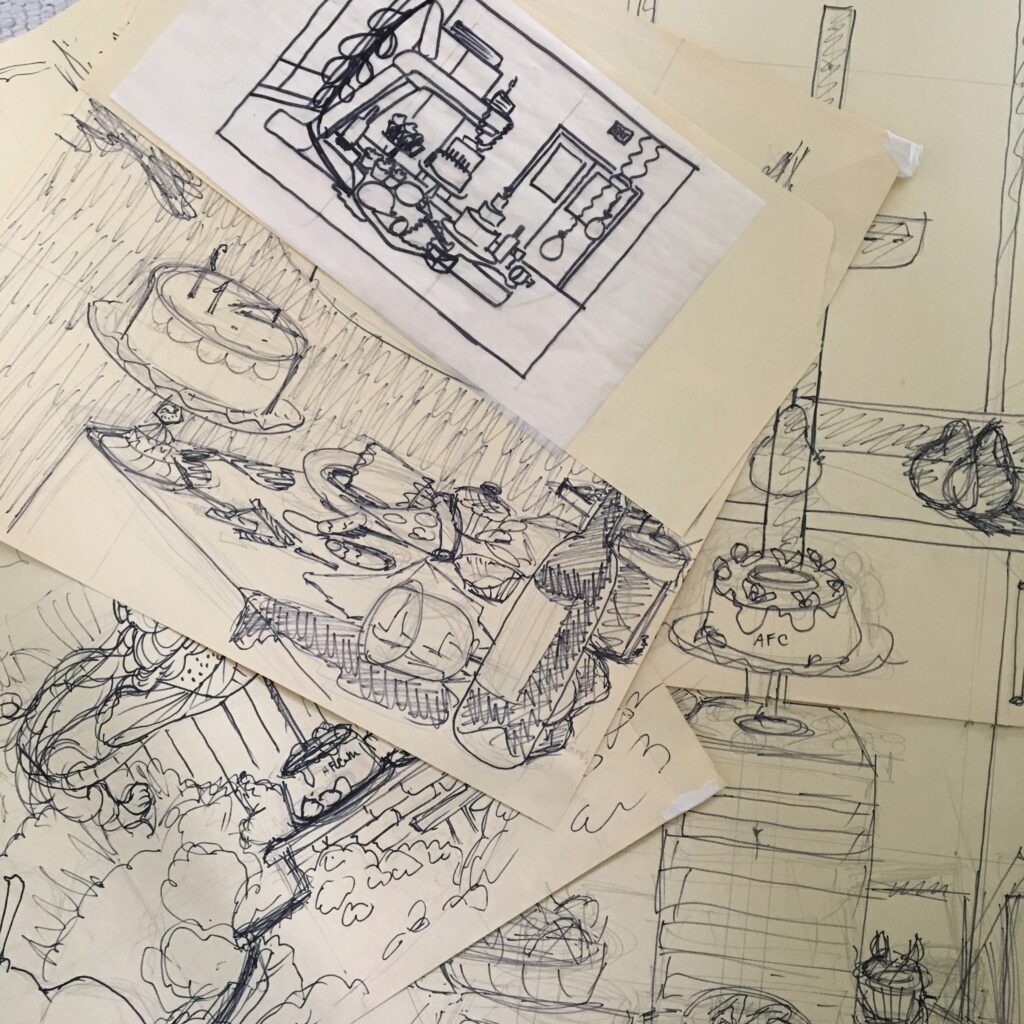
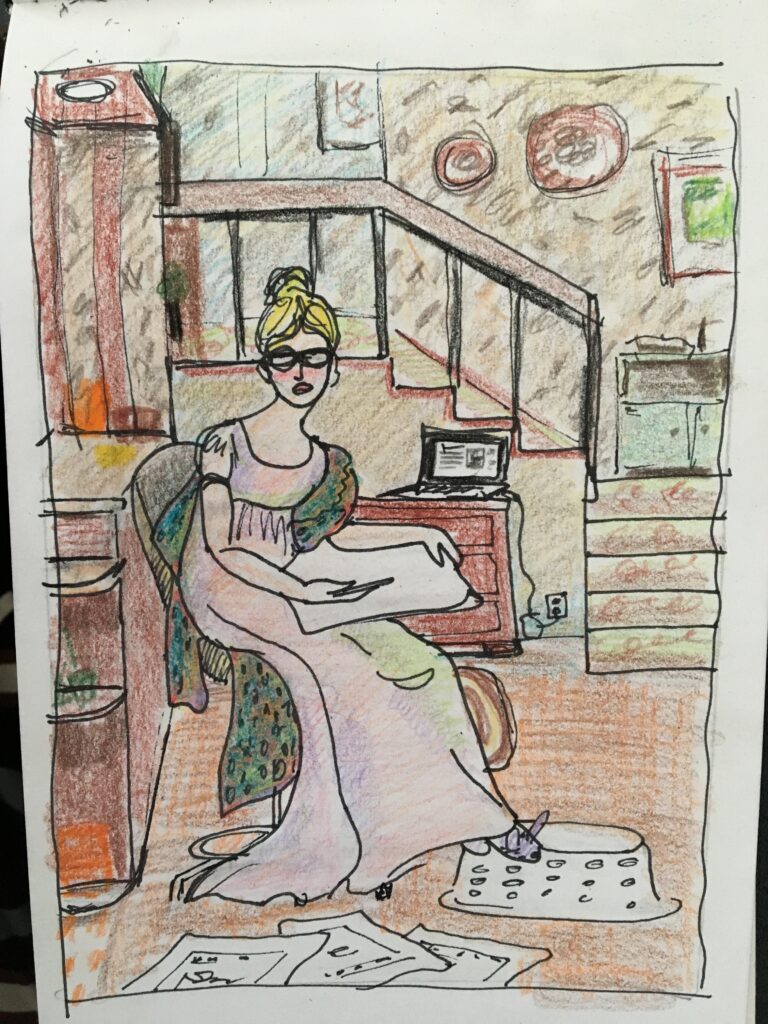
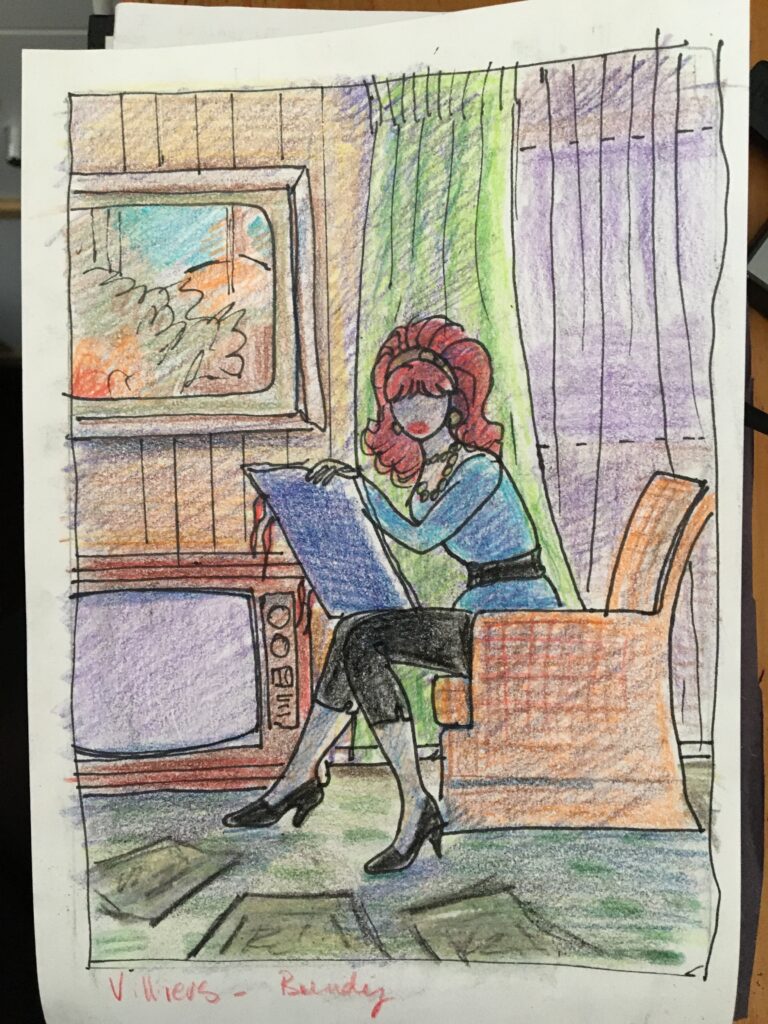
Below are sketches of some of my ideas for this collaborative project which brings the individual stories of women’s experiences of Covid-19 to life in a series of photographs and short videos produced by Dawn van de Schoot. My drawings reference Jane Austen, Peg Bundy, and a painting by Marie-Denise Villers, Portrait of Charlotte du Val d’ogees, c. 1801, which depicts the subject drawing beside a window with a broken glass.

As someone who has long occupied a home studio, I suddenly found myself with a house full of people all trying to work from home at the same time. It felt like I was living through the clash of two eras: heretofore I’d had to consciously contradict the contemporary suspicion that the stay at home worker is a Peg Bundy ala 1990’s sitcom Married With Children. However now I was faced with the bizarre condition of having a sudden spike of interest in my work, with all the demands that come with that, while also having to keep up an appearance of not working, ala Regency era writer Jane Austen, for the sake of my co-habitants working in a variety of remote/zoom configurations in the same space. Looking back, it’s a little comical.

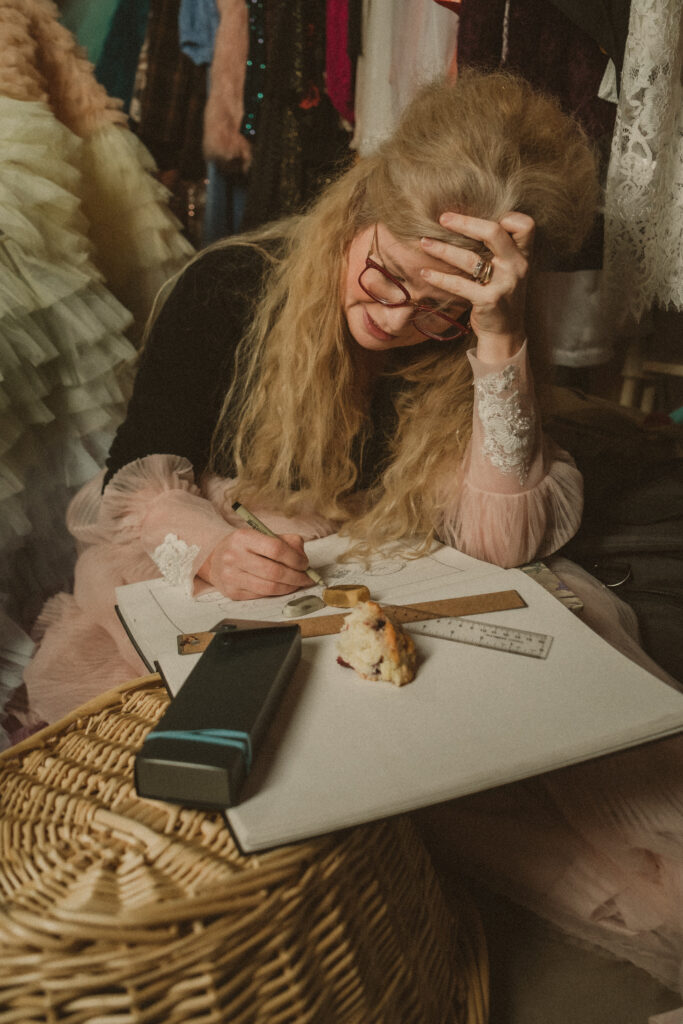
If Jane Austen were working through the Covid-19 pandemic she may have had some advice for us on how to get work done while not having a room of ones own to work from. Photo from the Kitchen Feminism Project, courtesy producer Dawn Van de Schoot, photographer Shannon Smith and stylists Nicole Does Makeup.

I am excited to share how @dawn_vandeschoot, photographer Shannon Smith and stylists @nicoledoesmakeup and the rest of the team @kitchenfeminism translated my experience into their medium. The project images for Kitchen Feminism: Moving Pictures are now live on their website at Kitchen Feminism! I’ll also be sharing some of the images from the project on my Facebook and Instagram accounts.

New painting: Set In Stone

Set In Stone, 24″ x 18″, O/C, CAN$ 1600

Finally completed after 3 months on the easel, give a warm welcome to Set In Stone. As part of my Cravings series exploring food obsession, Set in Stone features returning characters Pink Pear and the Jelly Doughnuts. While I Only See You focused on the exclusive relationship between Pink Pear and Jelly Doughnut, this painting also features an art history guest appearance by the OG stone cold mama of the paleo world, the Venus of Willendorf, reigning atop her divan of doughnuts.

Containing Desire, 10″ x 8″ O/C CAN$ 495 framed

Following on Containing Desire (above), which addressed the futility of trying to contain the seductive influence of our favourite foods, I introduced the idea of the deep biological or evolutionary basis for that power. Since the reason for the dilemma is really nothing to do with the food itself, but to do with our own biological safeguards from starvation, no mountain of contemporary rationalization will depose the reign of our cravings.

Sisyphus Motivation, 20″ x 24″ O/C CAN$ 1600

It’s often the ad libs that bring new discoveries and additions to my visual language. I truly loved painting the conversion of the stripes on the kitchen towel into veins of dripping jelly as first developed in Sisyphus Motivation (above). In Set In Stone I discovered I could morph of the piped cream on the doughnuts into regal purple clouds which surround our paleo-lithic golden goddess. Check out the progression video for how this painting evolved on the canvas:

Progression Video for Set In Stone

Abstract Art Canada Interview

The Artist painting the artist.

Abstract Art Canada is a uniquely supportive online art gallery promoting the work of Canadian artists who work with abstraction. Founded by and for Canadian artists, I am happy to be working with them to share the Fun Money series. Recently they asked if they could interview me about my work. Of course I said yes!

https://abstractartcanada.com/in-conversation-with-debbielee-miszaniec/
Aimee Coles recently interviewed me about my work for Abstract Art Canada’s Blog. Follow the link to read the article.

Current Work In The Gallery:

New Painting: I Only See You

I Only See You, 9″ x 12″, O/C, CAN$550

I recently finished I Only See You, a new oil painting in my Cravings series of still life paintings exploring food obsession. I Only See You focuses on the exclusionary relationship between Pink Pear and Jelly Doughnut as Sisyphus’ warnings of the doomed nature of the task fade into the background.

My inspiration for keeping the composition relatively spare in this painting came, as per Tempting Fruit, from the background colour of Terre Vert and white that I initially laid down. I loved the way colour gave an empty pining feel to the composition, so I chose to emphasize that.

I loved working with this soft complementary colour scheme so much, I think I will be using that again at some point soon in this series, possibly in the upcoming Cupcake/Fragonard paintings.

Ready For It? The 2022 Calgary Stampede Starts Tomorrow!

Pictured here: Cupcake, framed and ready to hang.

My paintings will be there, framed and ready for you to purchase. Take a look at the gallery below to select your favourite, then head down to the Western Oasis on the grounds to pick yours up before it’s gone. Access to the art show is included in park admission.

Western Showcase Mini Masters Salon
Calgary Exhibition & Stampede 2022

July 8 – 17th 2022
Calgary Exhibition & Stampede – Western Oasis – Art Show
1410 Olympic Way SE Calgary AB T2G2W1

 Butter Tart, Cinnamon Roll, Cupcake, Lemon Bar, Maple Cookie, and Strawberry Shortcake
Each 5” x 7” oil on canvas is CAN$ 250 framed.