Tag: #stilllifepainting

Earthly Delights – Lost In The Garden

Tempting Fruit (After Bosch) – 9″x12″ O/C

For the past few months I have been devouring a mountain of books and furiously planning, scheduling and scribbling in preparation for this day! June 1st marks the start of a pretty major new studio undertaking:

Over the next 6 months I will be creating a large scale triptych oil painting inspired by Hieronymous Bosch’s masterpiece, The Garden of Earthly Delights (c.1500) For this project I will be expanding upon my still life food paintings, by incorporating them into an encyclopedic larger than life triptych referencing the moralizing religious art of the Northern Renaissance.

The inspiration for this painting follows from my own experience navigating contemporary health and diet culture: I lost over 35% of my body weight to achieve a normal range BMI, then maintained that weight loss for about 2 years before beginning a period of weight cycling. Technically this is still a weight loss success story as current definitions of long term weight loss include maintaining a reduction of 10% or more initial bodyweight a year or more. However, I realized in the past couple years that keeping my weight in the normal BMI range had become a Sisyphean task requiring more and more extreme measures that have been limiting my life as well as causing a variety of physical and psychological side effects not dissimilar to those described in anorexia.

The Earthly Delights series is an exploration of that journey. As the majority of those who successfully lose weight will eventually regain it, I know I am not alone in this experience. Giving this experience a voice through my art is an opportunity to transform personal challenges into an expression and exploration that can help others understand this all to common journey freshly.

In Earthly Delights – Lost In The Garden I will be exploring the lifecycle of influences that continue to complicate our relationship with our bodies and our weight. In our post colonial culture a sense of morality has been applied to our consumption and body size since at least the 4th century BCE when gluttony was listed as one of the seven deadly sins or vices in Christian lore. The prophets of health and diet culture proclaim their one true way to attain good health, longevity, and a good life, but frequently their prescriptions are found later to damage rather than help. Too late the damage is done and the disciple is left to live with the consequence.

I welcome you to come with me on this journey through this project over the next 6 months as I share images, thoughts and process on social media, in my newsletter (Subscribe), Blog, and on my website. Together we go forth!

We acknowledge the support of the Canada Council for the Arts.

Earthly Delights: Background

Enchantment – 11″ x 14″ o/c – $825 CAD

I’m writing this post today to share the origins of the Earthly Delights series of paintings. My intent was to share a statement about each of the paintings in the series in the coming months, however I was loathe to repeat this background with every post. It might also get a little repetitive for you the reader if you are following along reading the statements for each of the pieces. So this post is mainly here so I can link back to it in successive posts.

The inspiration for the Earthly Delight series follows from my own experience navigating contemporary health and diet culture: I lost over 35% of my body weight to achieve a normal range BMI, then maintained that weight loss for about 2 years before beginning a period of weight cycling. Technically this is still considered a weight loss success story as current definitions of long term weight loss include maintaining a reduction of 10% or more initial bodyweight a year or more. However, I realized in the past couple years that keeping my weight in the normal BMI range had become a Sisyphean task requiring more and more extreme measures that have been limiting my life as well as causing a variety of physical and psychological side effects not dissimilar to those described in anorexia or cases of semi-starvation. Yet, I can feel the health consequences of weight regain too, and fear the effects of potentially returning to my initial bodyweight. What to do?

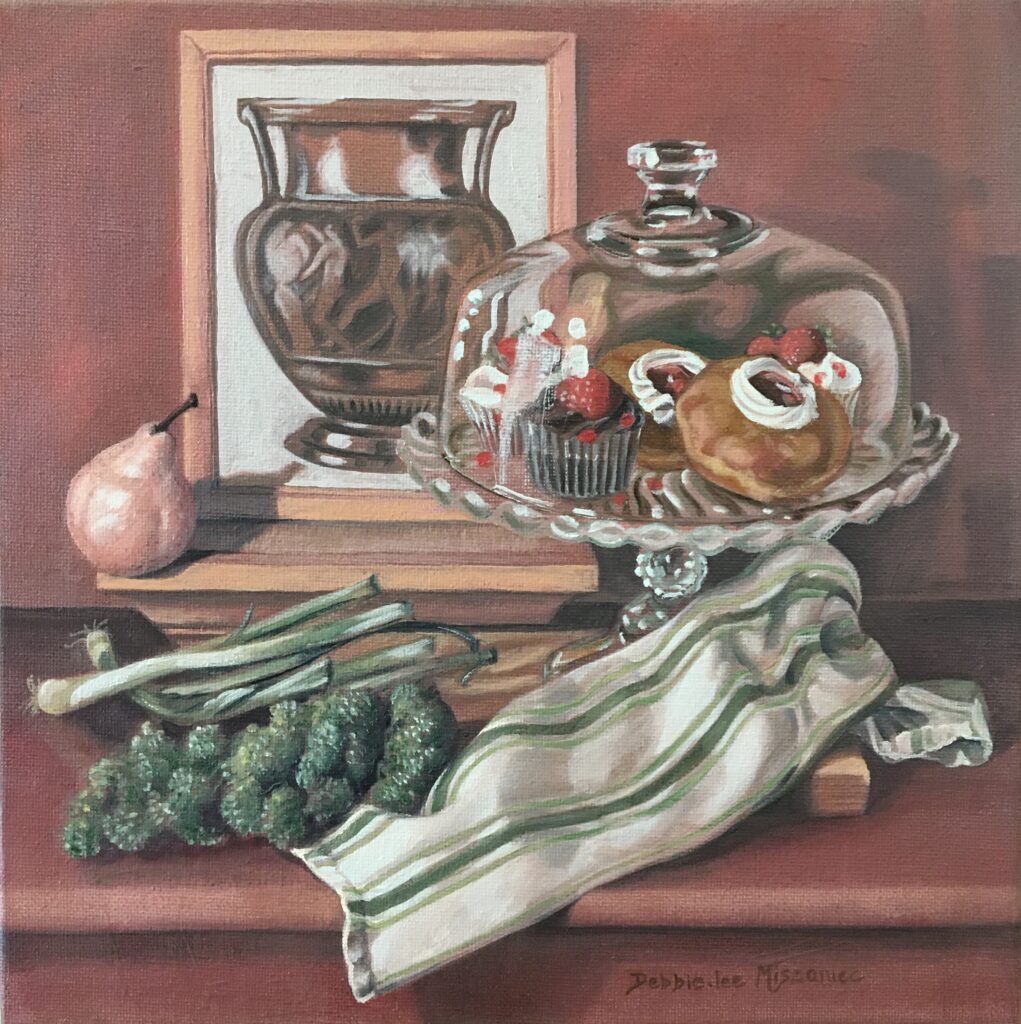
The Earthly Delights series is an exploration of that journey. Early in 2019 I realized that I had developed a preference for understanding my world through the lens of food. Politics, culture, gender, money, it didn’t matter, if it could be understood through a menu, recipe or food analogy, I was interested. The fascination had even begun to infiltrate my art. I realized that I could spend countless hours in meticulously rendering images of food in my paintings. At the same time, I also realized that the paintings which had images of food in them were more generally remarkable when shared with my community. I began to think that my fixation might be more than just mine and that this might be a subject to explore in its own right. At the end of 2021 I began to explore my food fascination directly in small still life paintings of an anthropomorphized pear longing after a dome covered cake plate of dessert treats.

Containing Desire, 8″x10″ O/C Debbie.lee Miszaniec

This lead to the larger scale series, 10 Still life Paintings in Places of 2022, where I contextualize the relationship of the pear to its longings through placing it in a number of real world locations that speak to the weight loss journey. In 2023 I am continuing the Earthly Delights inquiry with an exploration of the social/moral aspects of health and diet culture in Lost In The Garden.

As 28 – 30 percent of Canadians in the last couple years alone have indicated in polls an intent to start calorie restricted diets, but 80 percent of those who successfully lose weight will regain it within the year due to the body/minds reaction to caloric restriction, the statistics support that I am not alone in my experiences. Discussions with friends, family members and colleagues also confirmed this for me.

Everyone I spoke to about the project had a personal story to tell and a perspective to share, some of which I incorporated into the Earthly Delights as elements of their stories resonated and clarified my own experiences. Giving my journey a voice through art is an opportunity to do the same for others, transforming personal challenges into an expression and exploration that can help others understand this all too common journey freshly.


Acknowledging our supporters:

We acknowledge the support of the Canada Council for the Arts.

Earthly Delights: Works in Progress

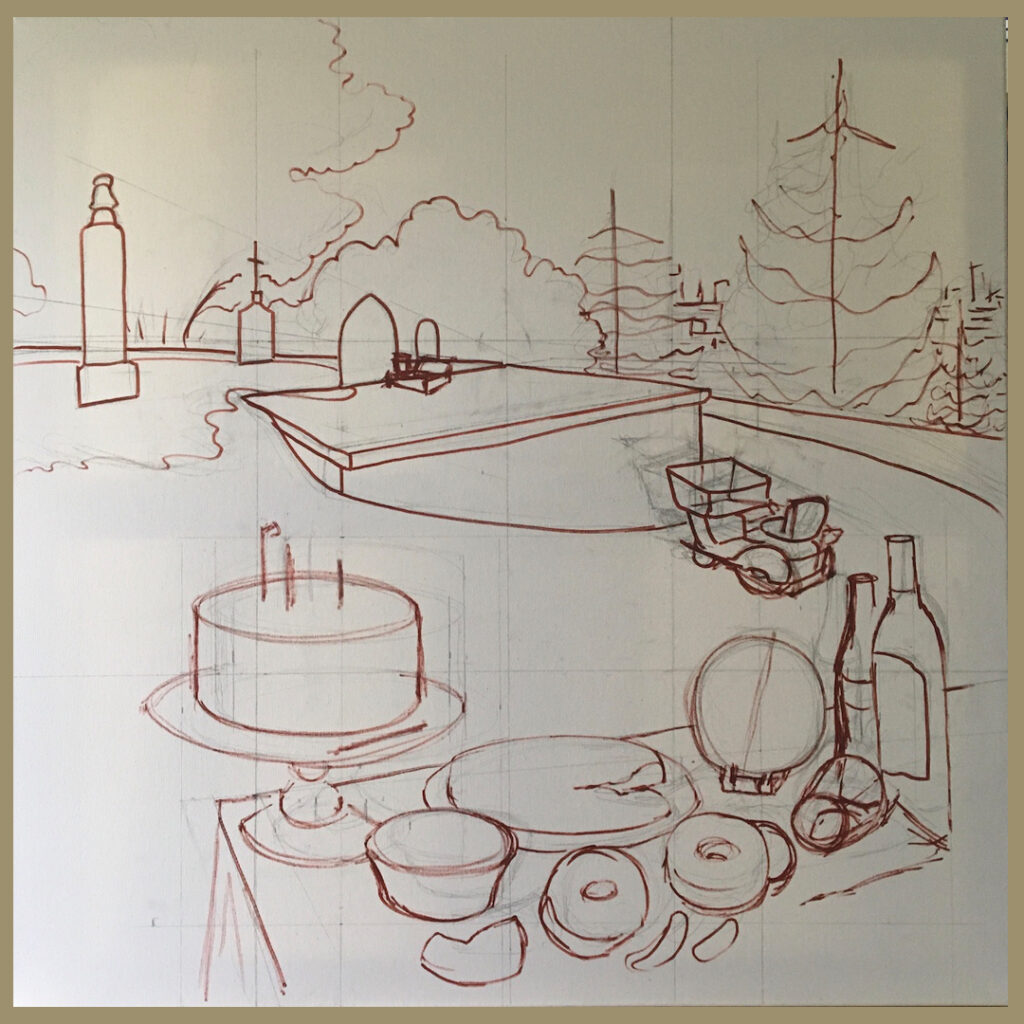
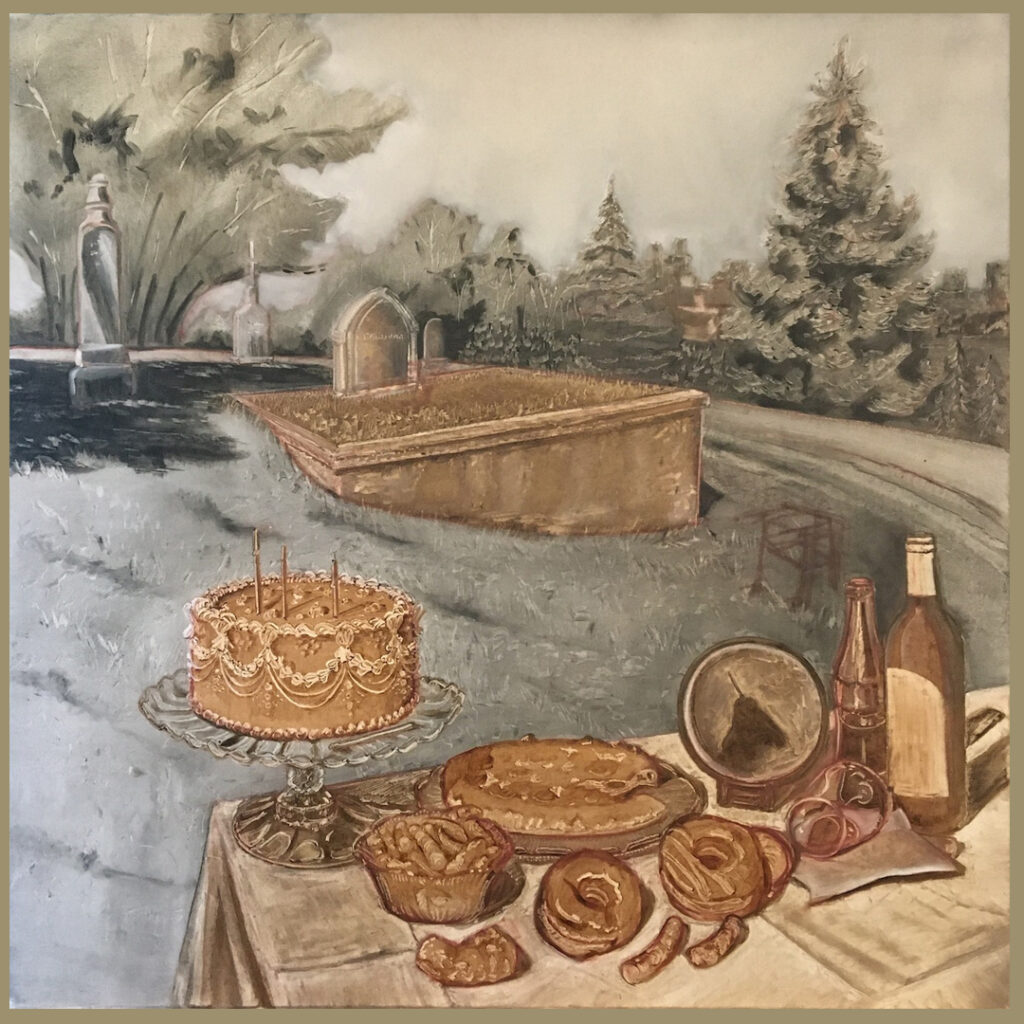
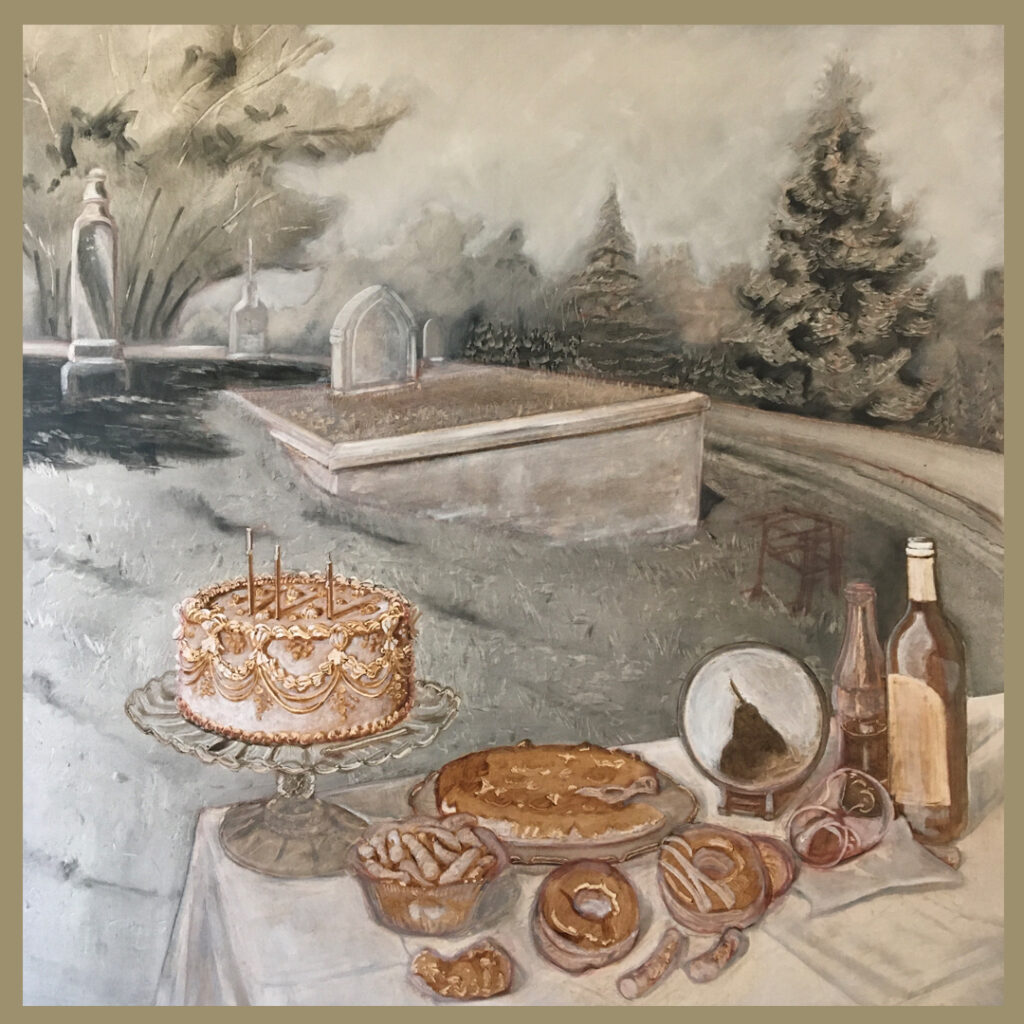
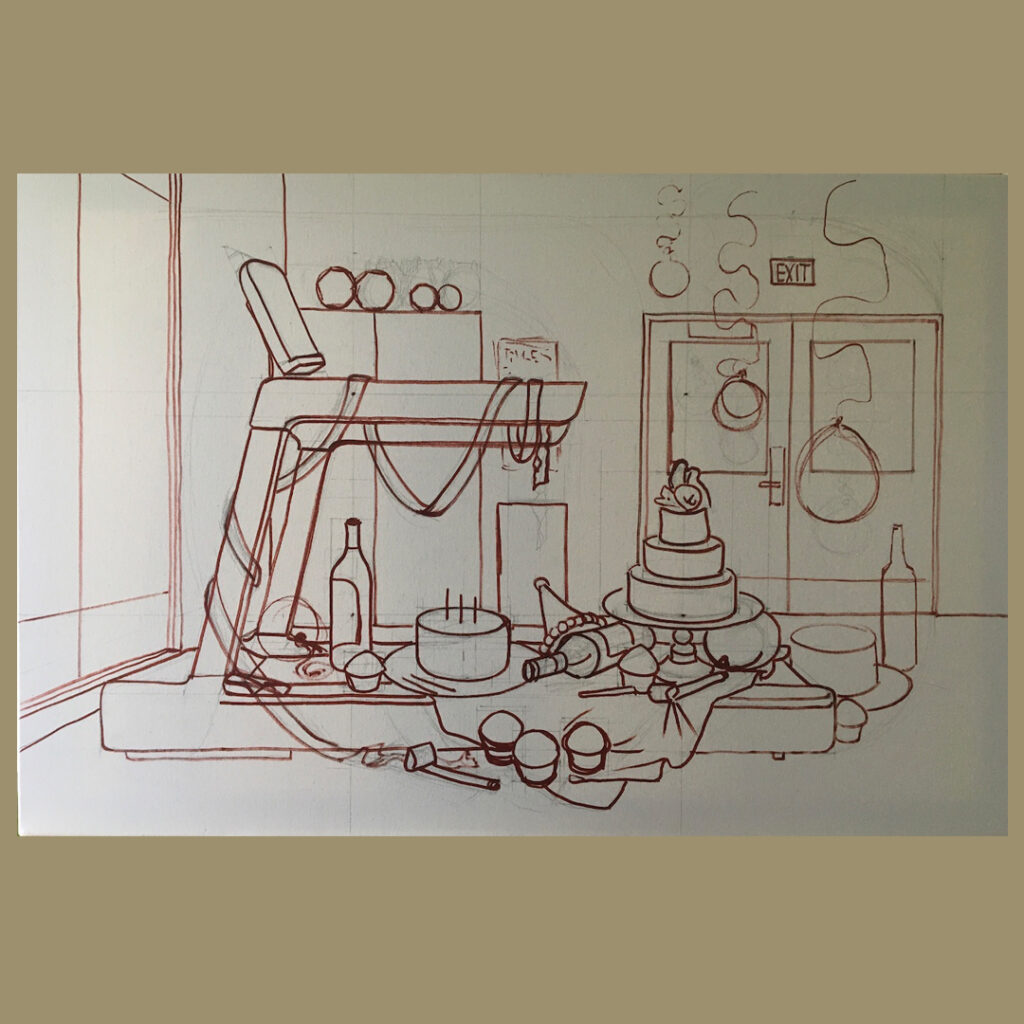
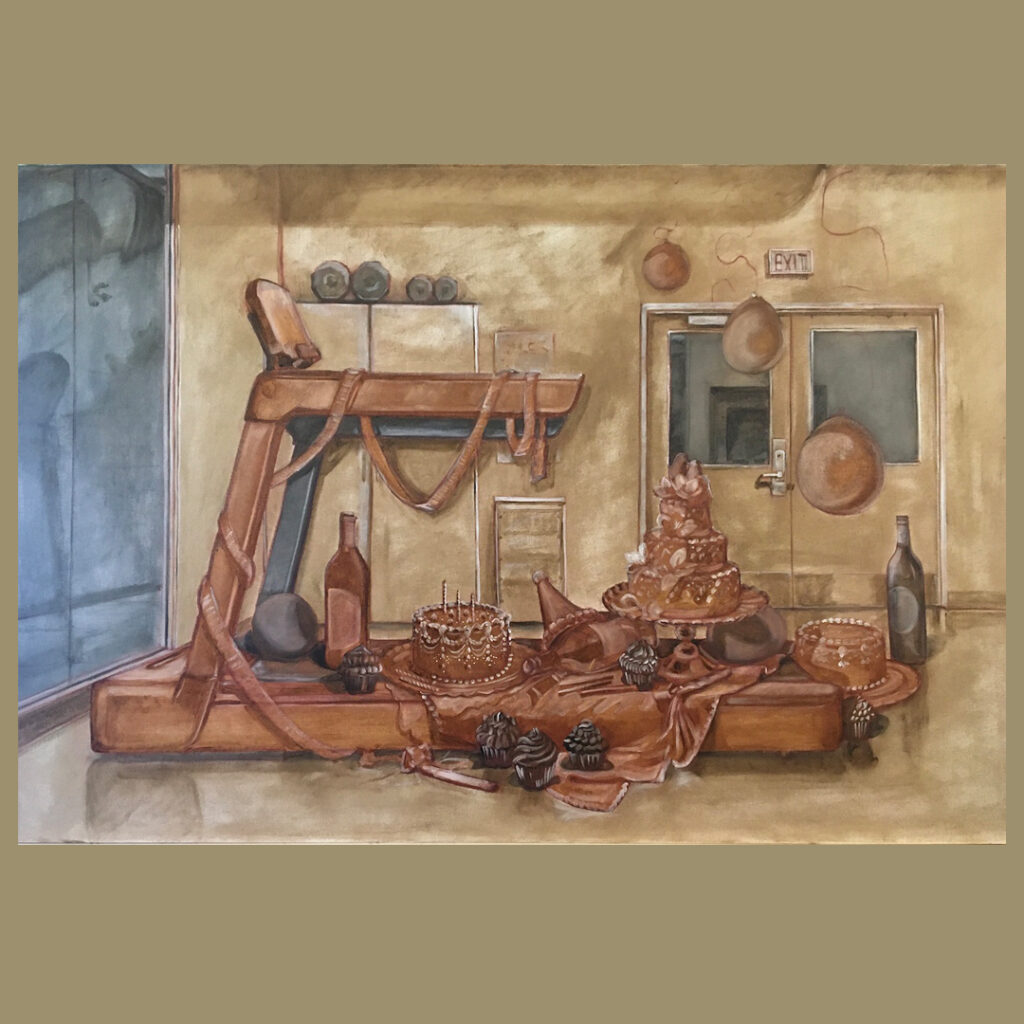
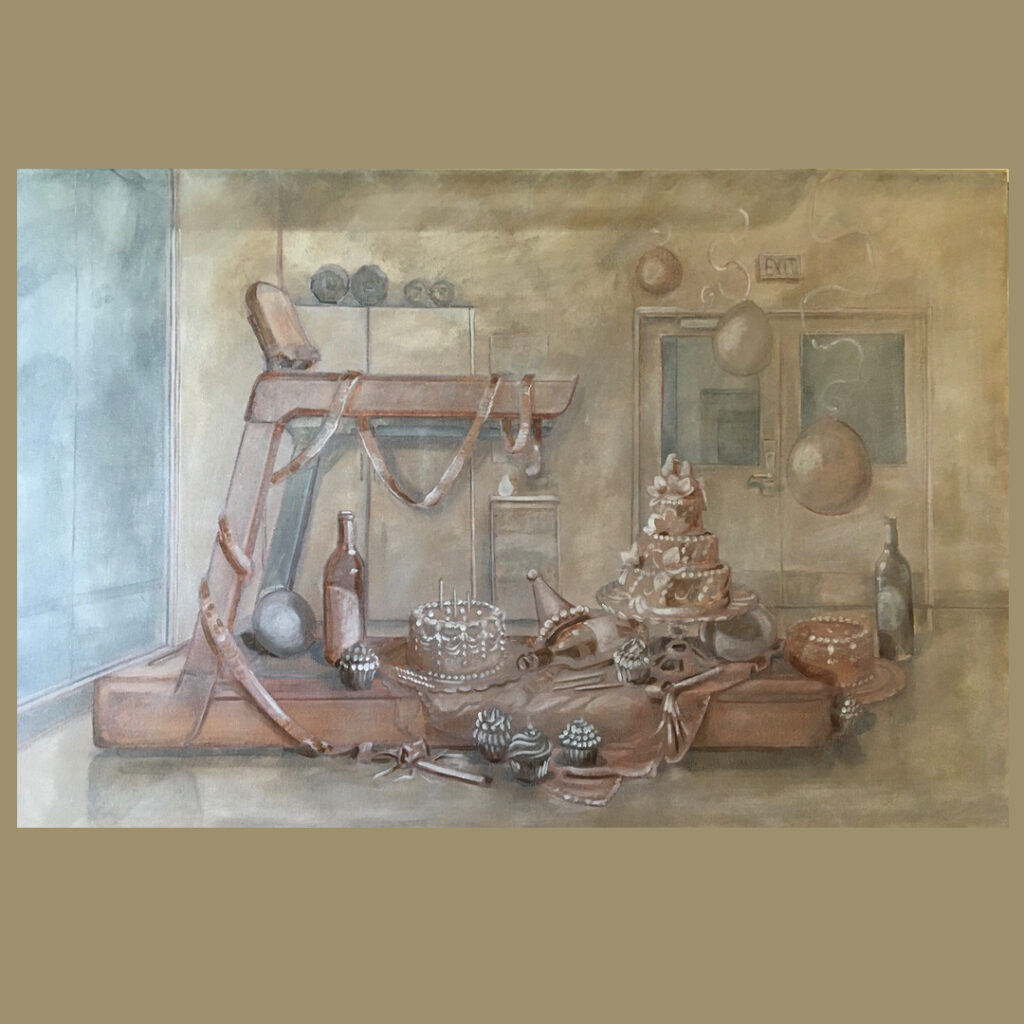
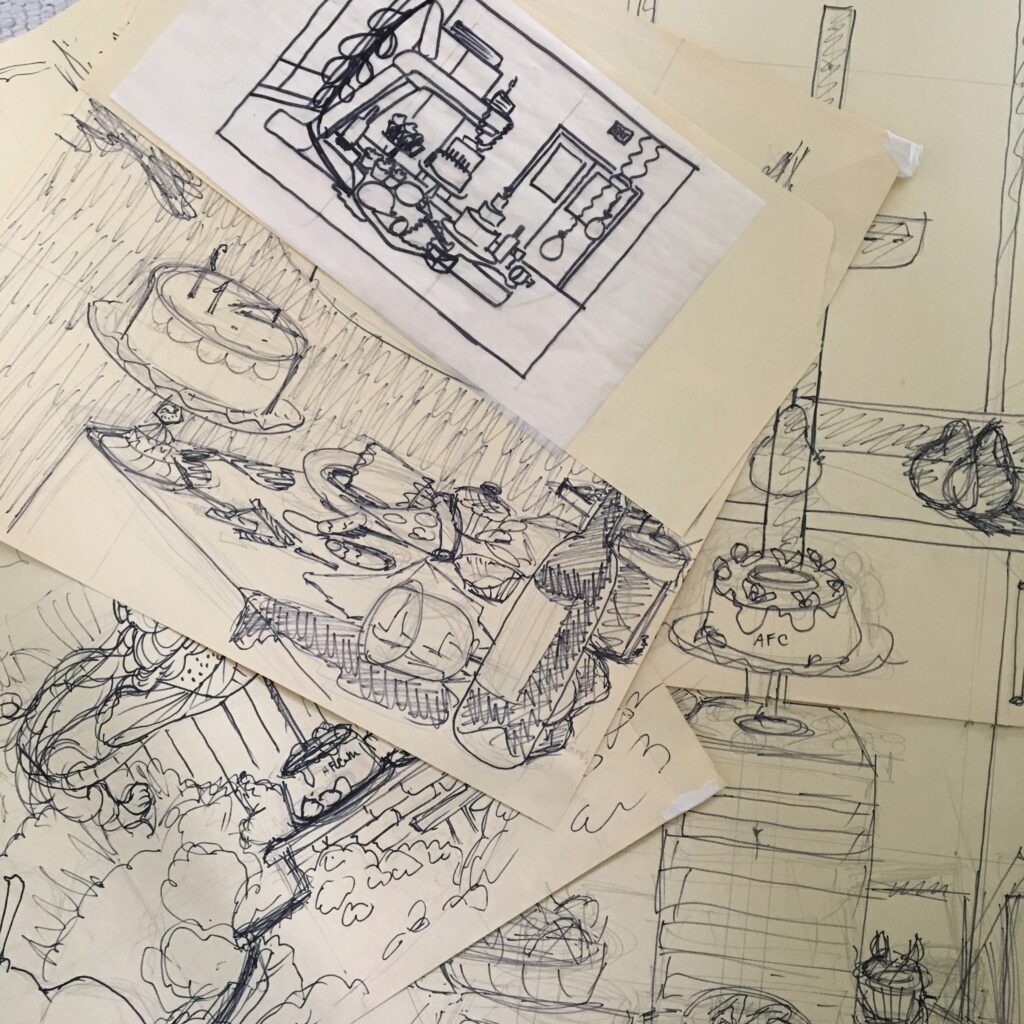
I’m writing this at about the halfway point of the project as funded by Calgary Arts Development’s individual artist project grant program. Earthly Delights – 10 Paintings of Food in Places, has close to half of the paintings nearing completion now, and I have begun assembling the reference material for the next three paintings in the project. By the time you read this blog post I anticipate the first four paintings will be complete, the next three will be well into development and I will be assembling reference material for the final 3 paintings in the project.

So by way of a progress report I will share process images of the first four paintings along with a few production notes on each of them. In later individual posts I will share my thought process behind each of these paintings along with the finished images. Until then, enjoy!

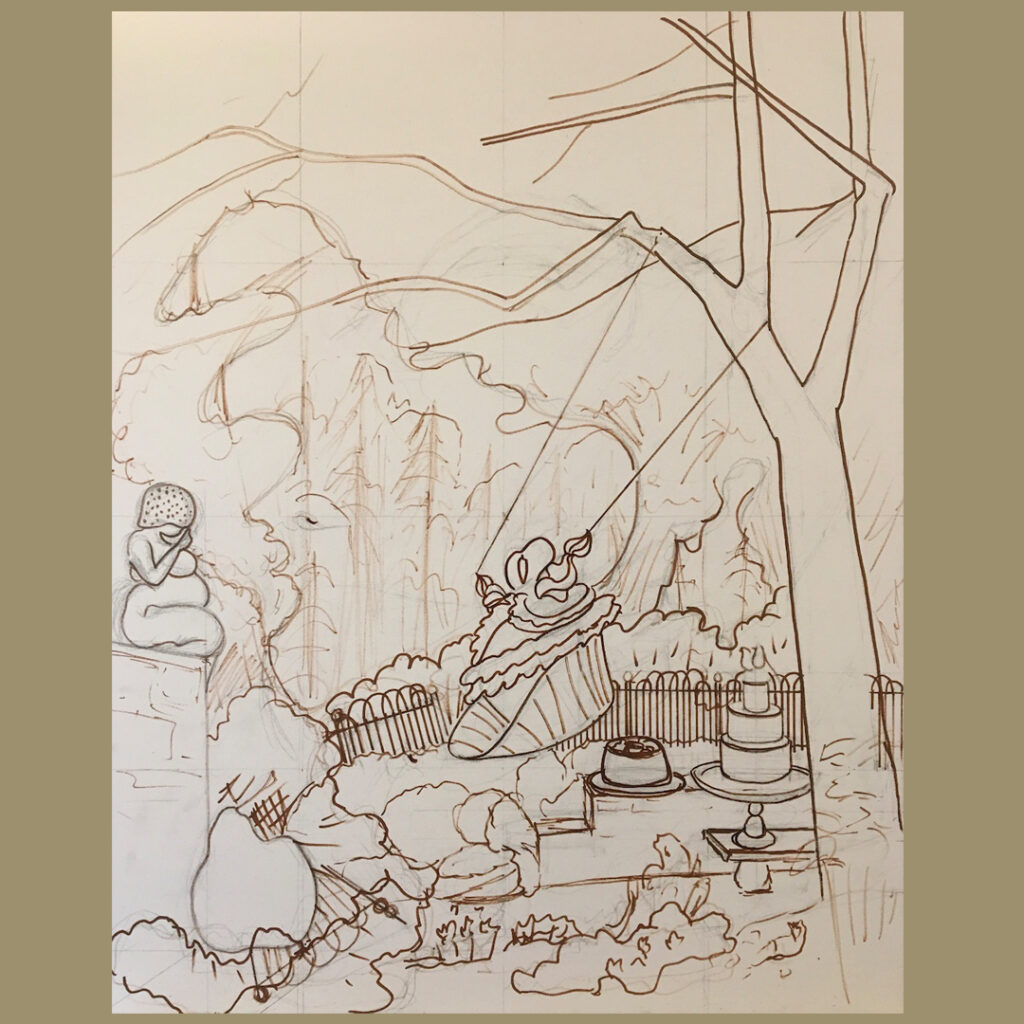
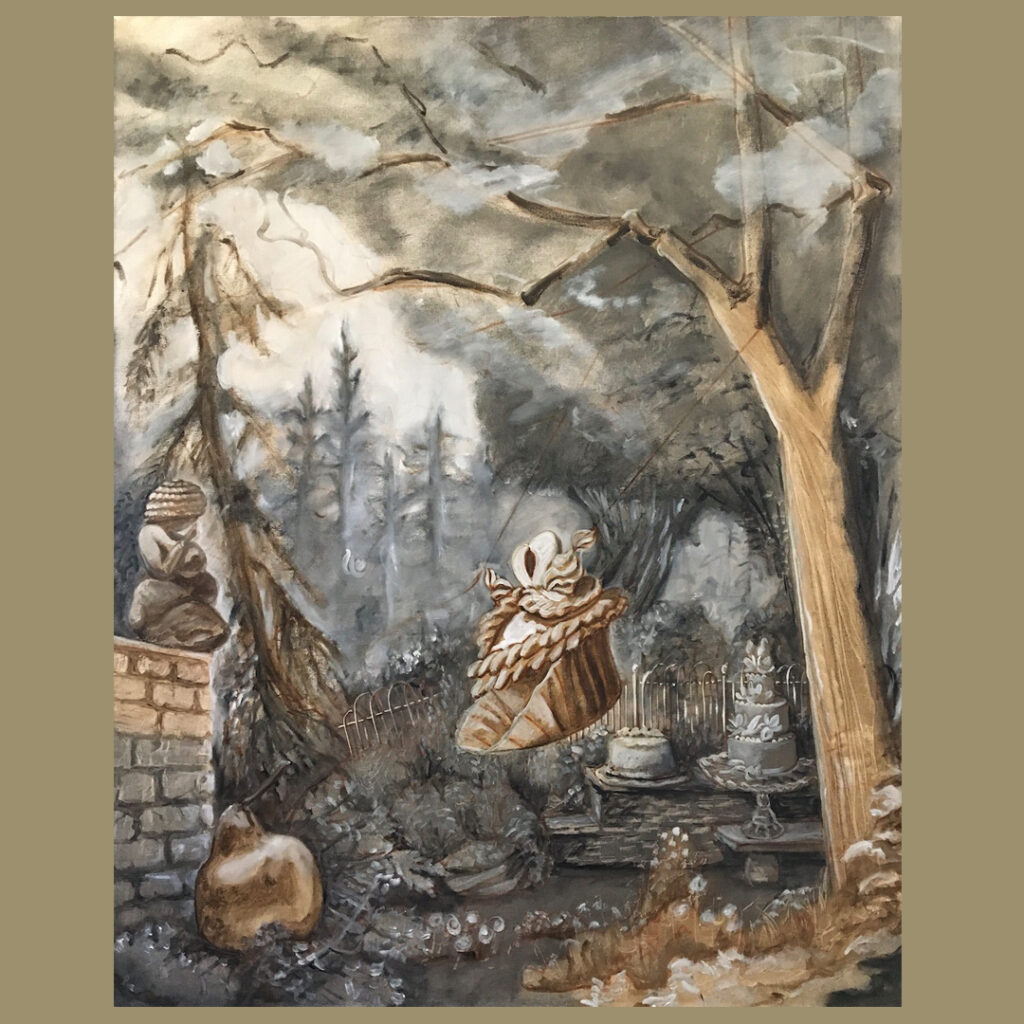
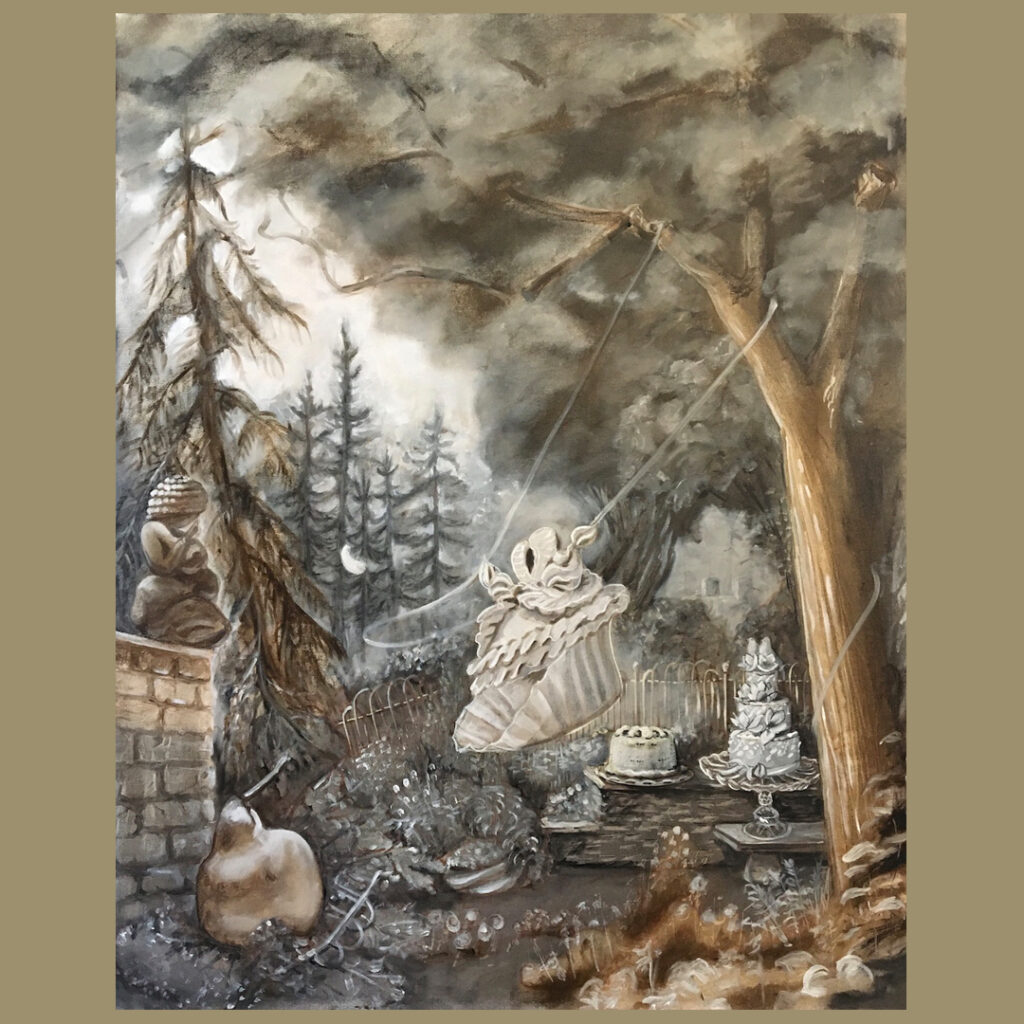
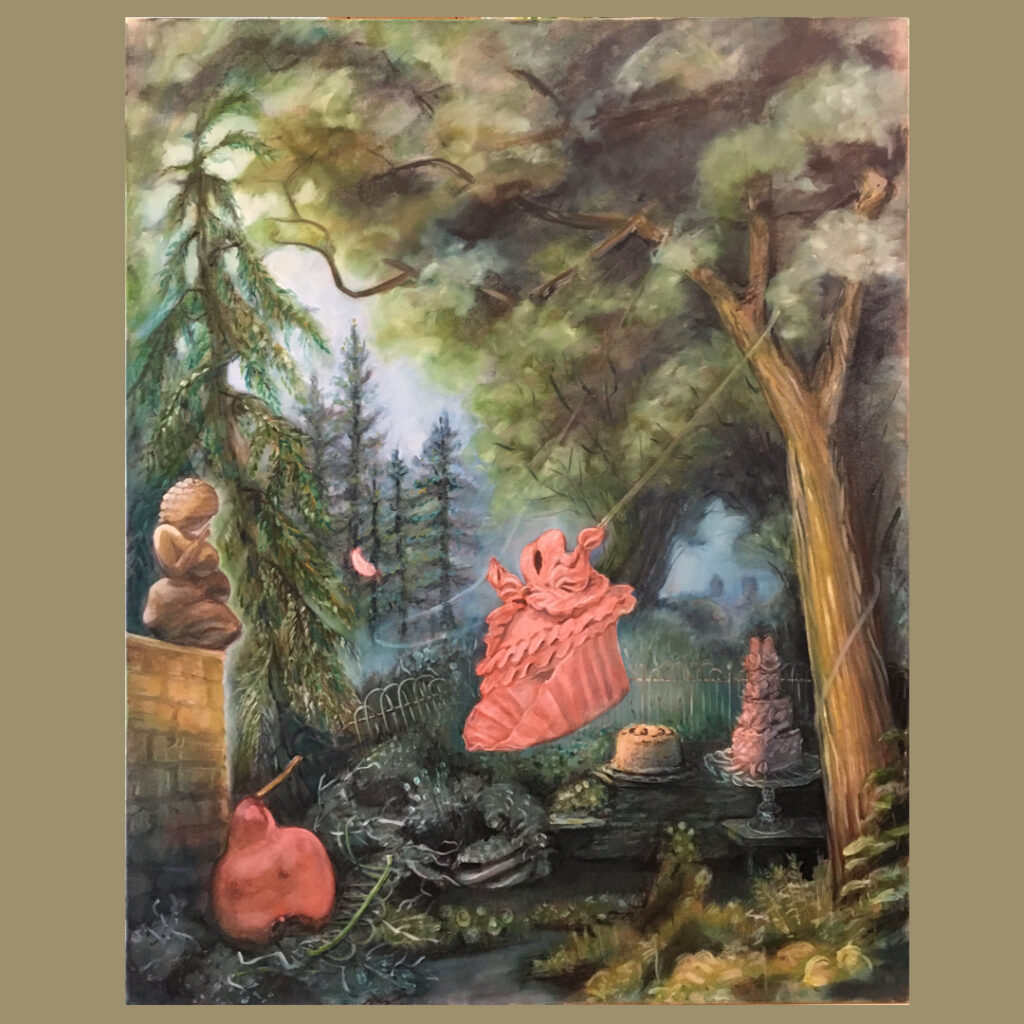
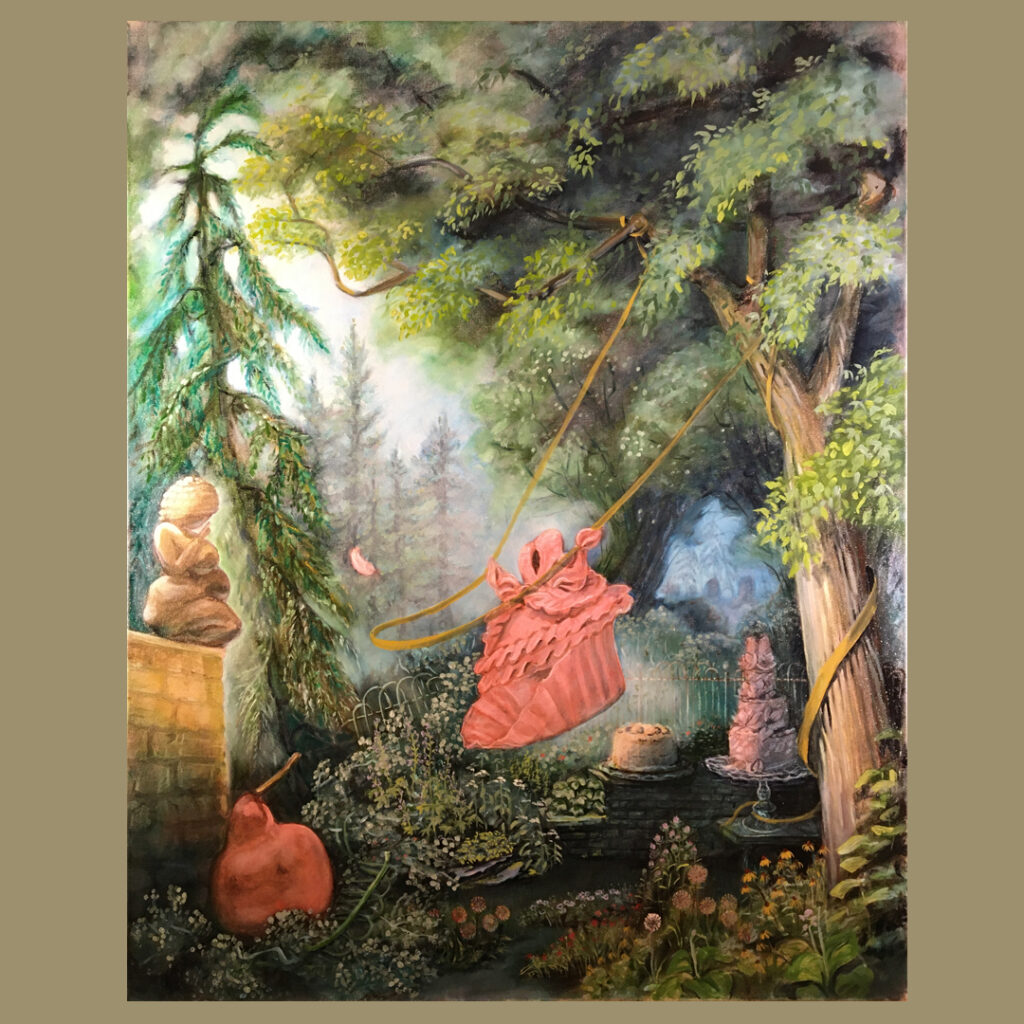
The setting for Stories as Old as Time is a collage of various spots I photographed at Reader Rock Gardens in Calgary this summer. If you haven’t been, it is a real treat, a very special garden space in a city more familiar for its prairie grasslands and naturalized green spaces. As this painting references Fragonard’s french rococo painting, The Swing, it has been quite a challenge to interpret this contemporary Calgary garden space through that lens, but thrilling to see the painting come together.

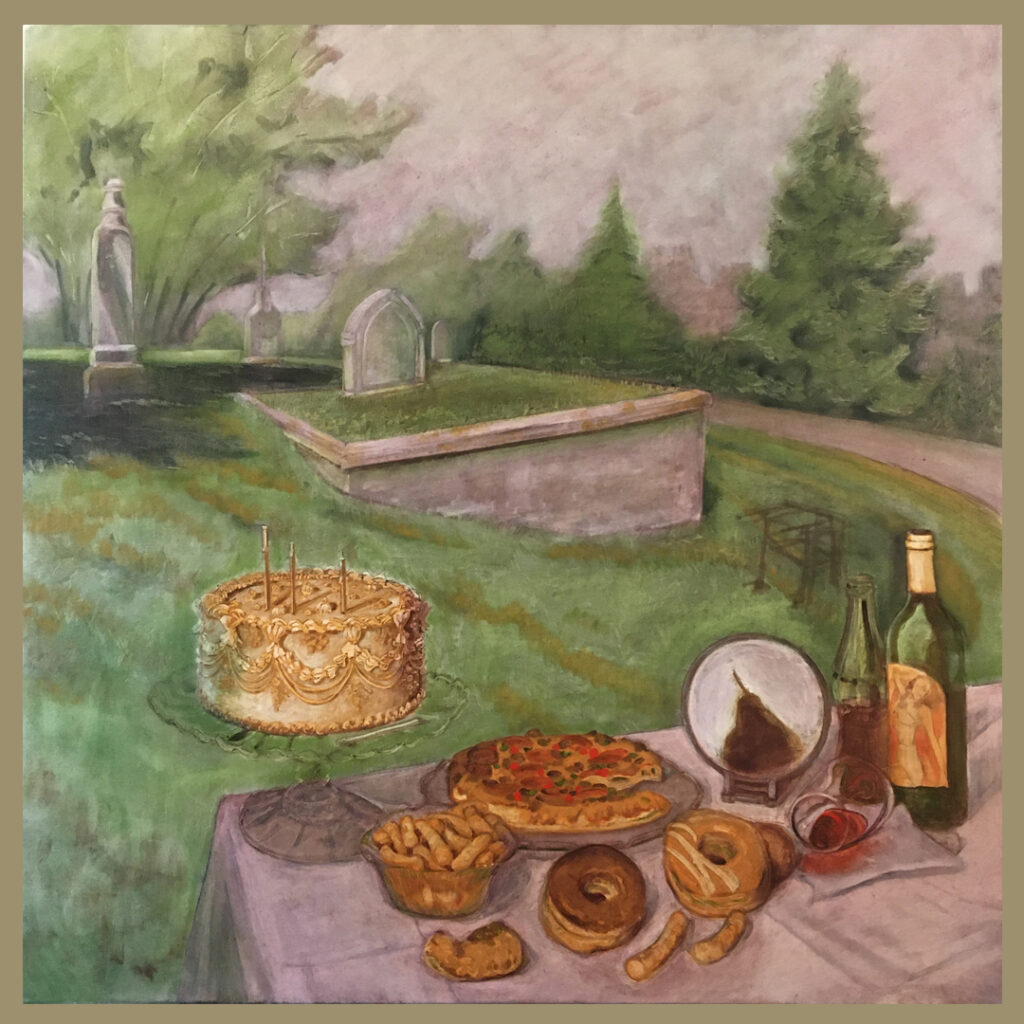
Leaving the Party Too Early is set in Union Cemetery, which is on the other side of the fence from Reader Rock Gardens. Fun fact, there is a reference to that in the background of Stories as Old as Time (top). I think you can tell that I am debating how I am going to incorporate a few elements in the painting around the central tombstone and between the grave plot wall and table on the right side of the painting. However I do have a plan for that and hope it goes well in the completion of the painting. I photographed the setting in the summer, however for the finished painting I want a more autumnal feeling, so I have been shifting the colours from the reference photos, taken on a clear summer day, to a moodier green/orange/purple scheme.

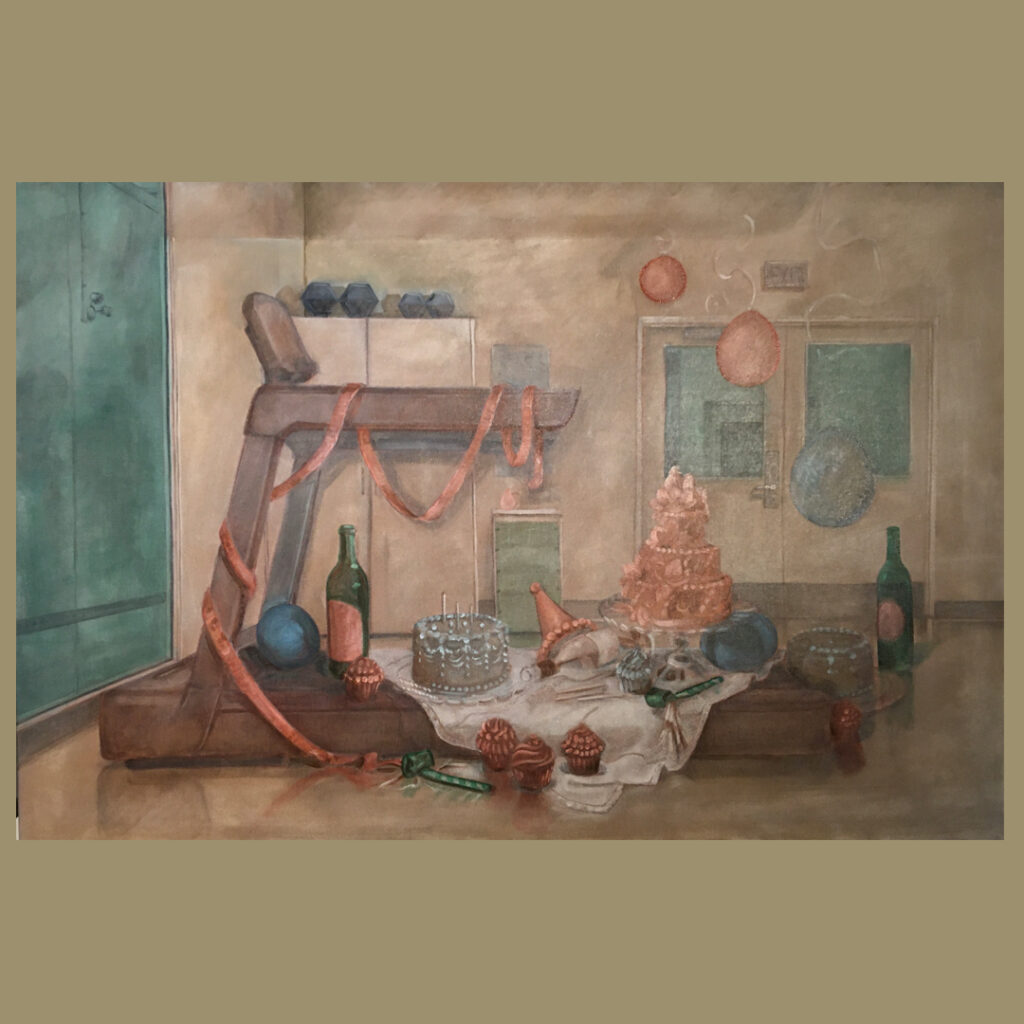
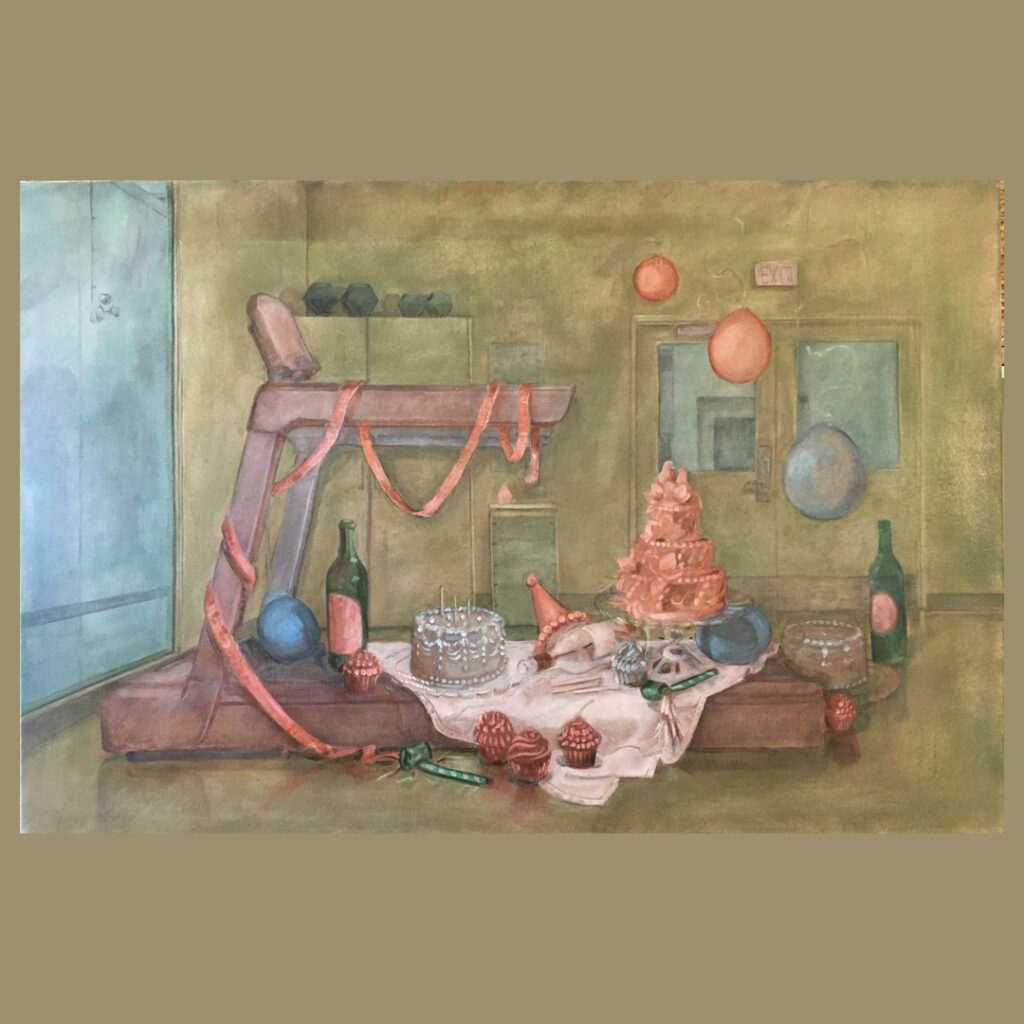
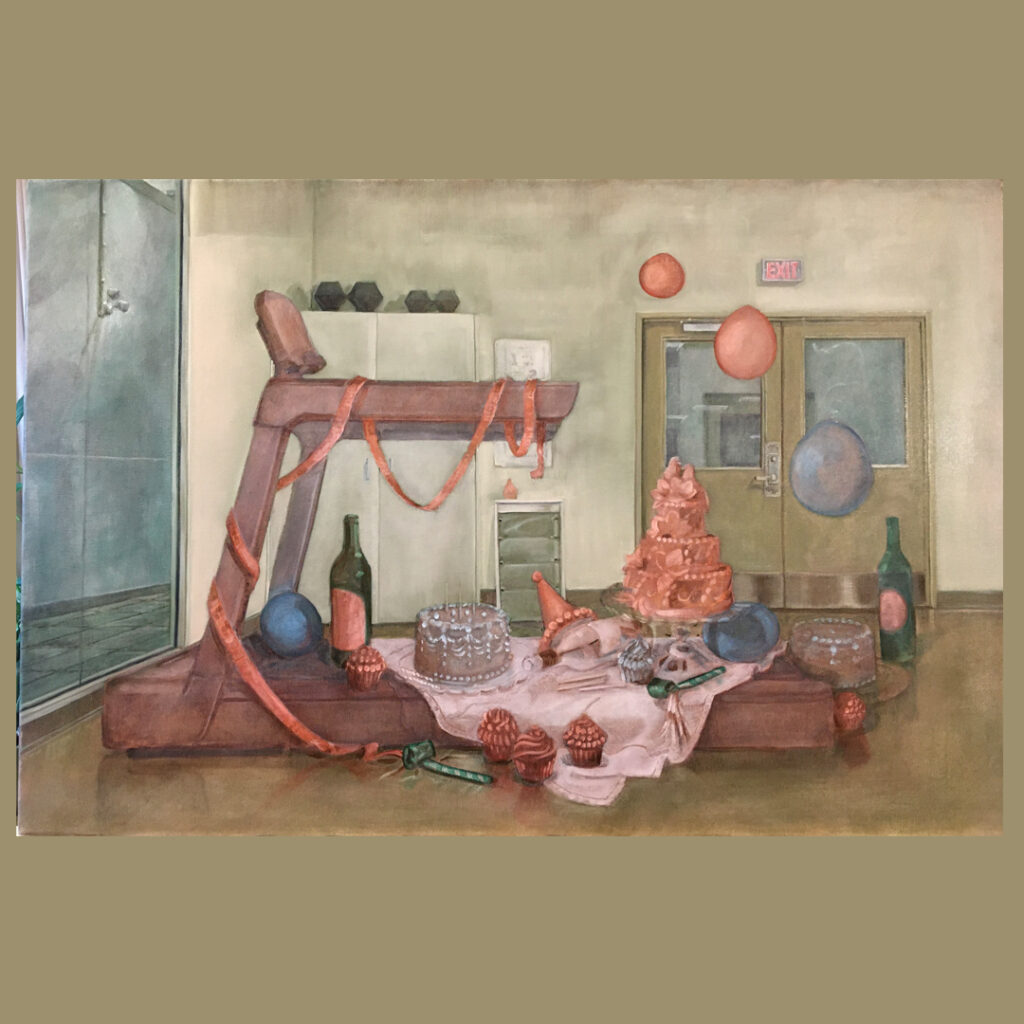
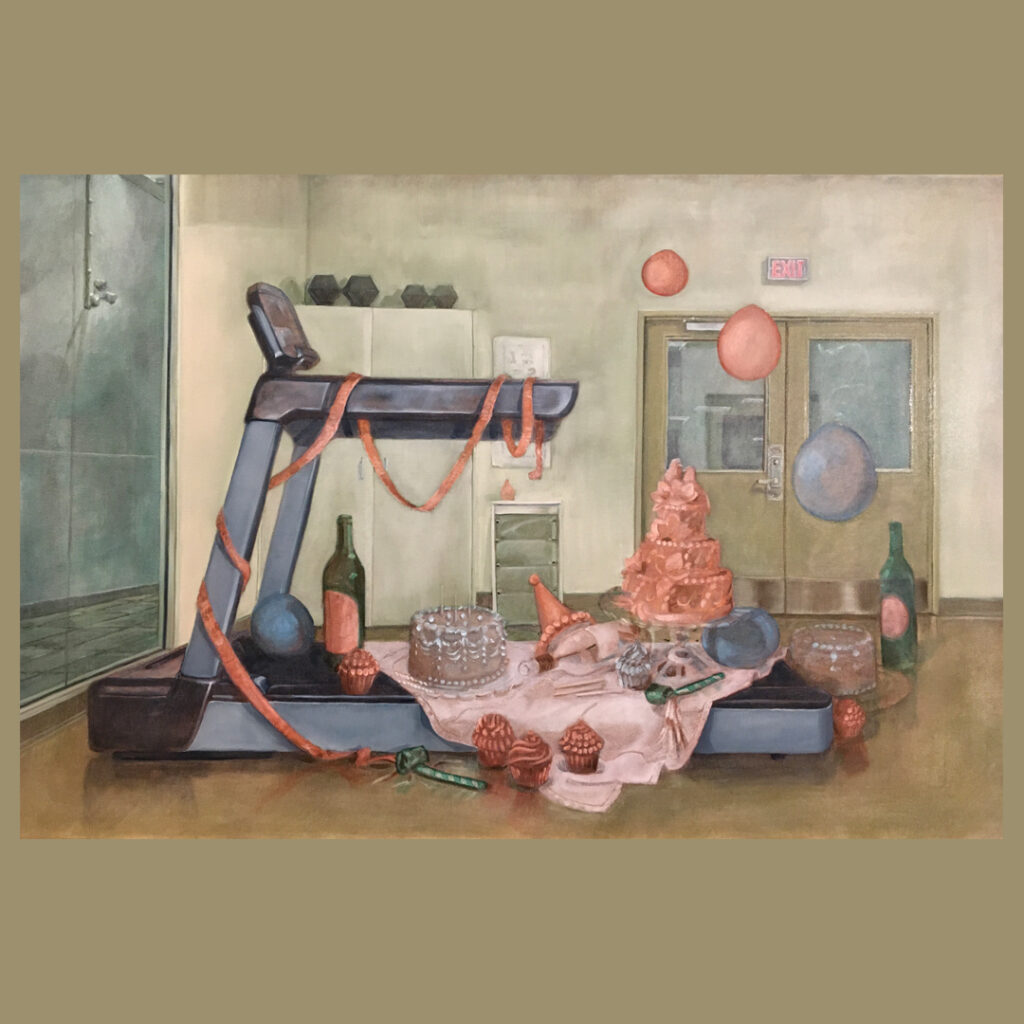
The Social Circuit was photographed at the Canyon Meadows Aquatic and Fitness Centre after hours. The lighting was quite challenging, being a combination of flat overhead and front facing flash. Plus I was taking the picture from between the arms of neighbouring fitness equipment. They cast some pretty odd shadows that are none the less an interesting compositional element I may choose to work with. Inspiration comes from all sorts of unlikely places. For this painting I had to manufacture a semblance of a fancy celebration cake and a wedding cake. This required a lot of Youtube tutorials for cake stacking and cake icing and piping techniques, and a few days of preparing the props before they could be photographed. So I have a new skill set now (I’m probably setting a high expectation for the next birthday cake I bake). Originally I intended this painting should have a very warm beige for the gym space, however the window areas, which I wanted to be a more spacious feeling blue-green, were so eye-catching on the left side of the painting I decided I had to shift the beige of the fitness room more to the green side. This choice basically meant a marathon 12 hour painting session that day. More colour adjustments from my initial design will be necessary as I paint the still life portion of the image. But that’s what keeps painting interesting isn’t it? It rarely goes exactly to plan.

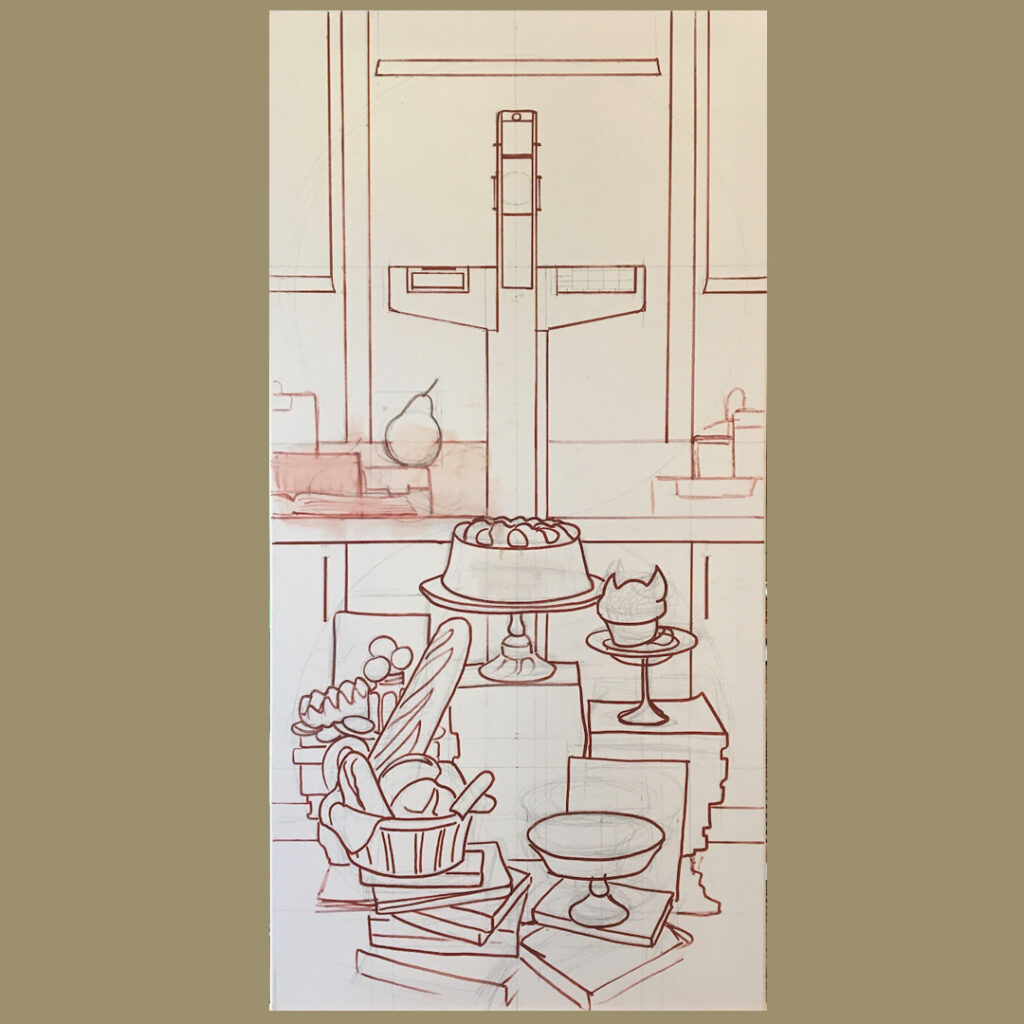
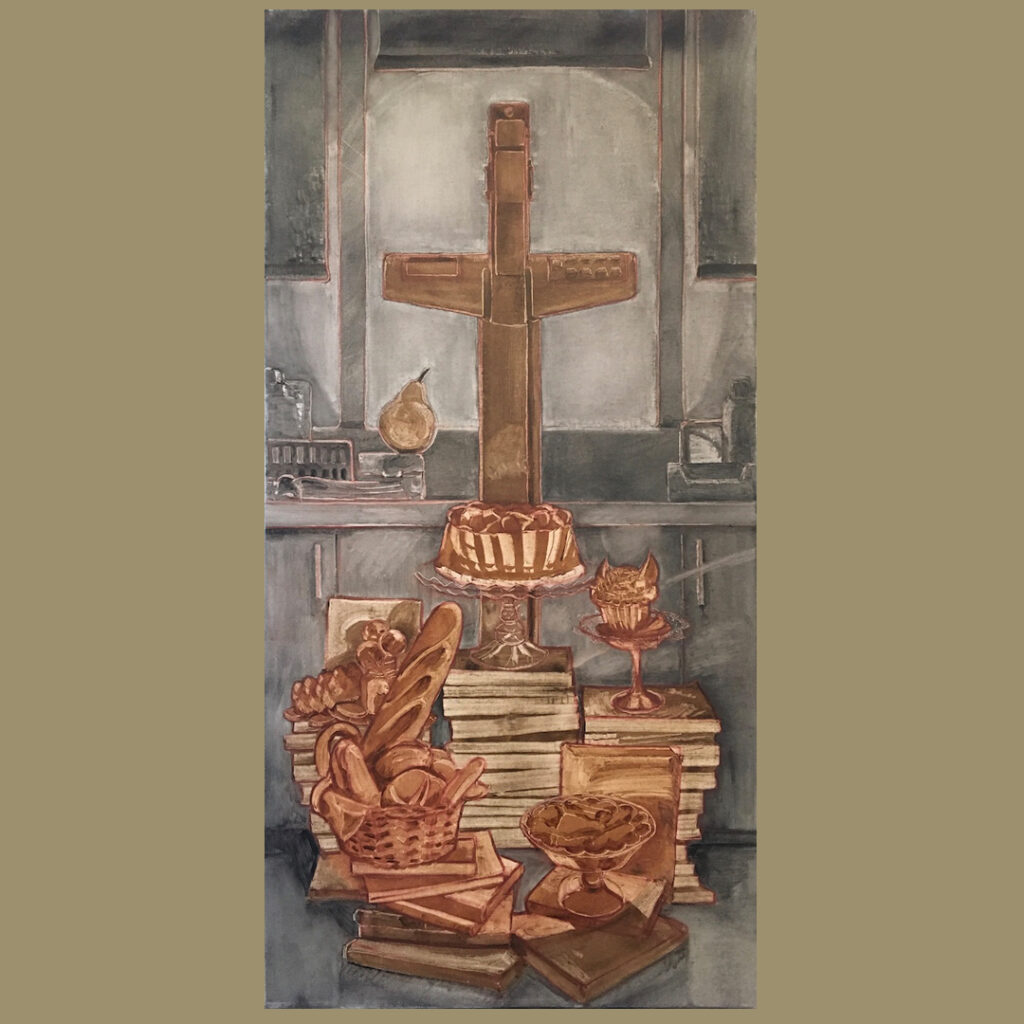
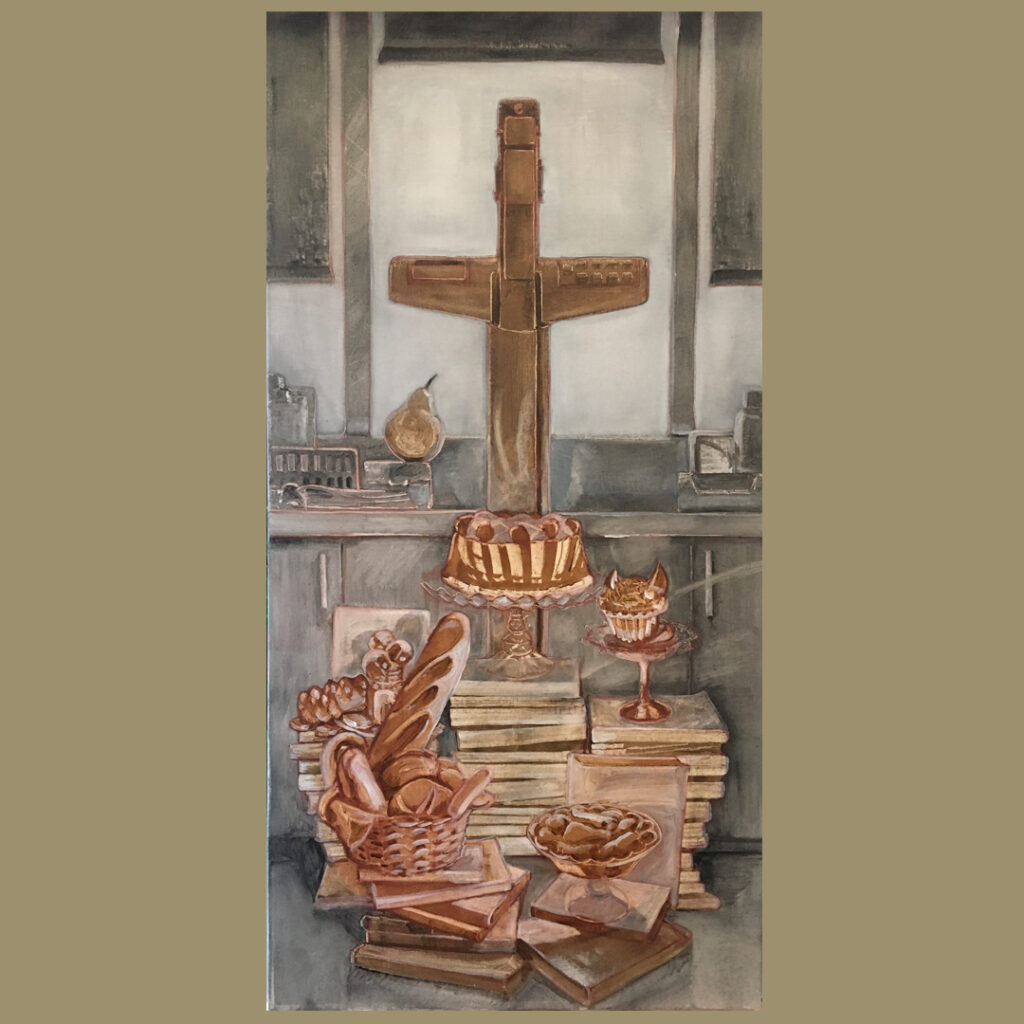
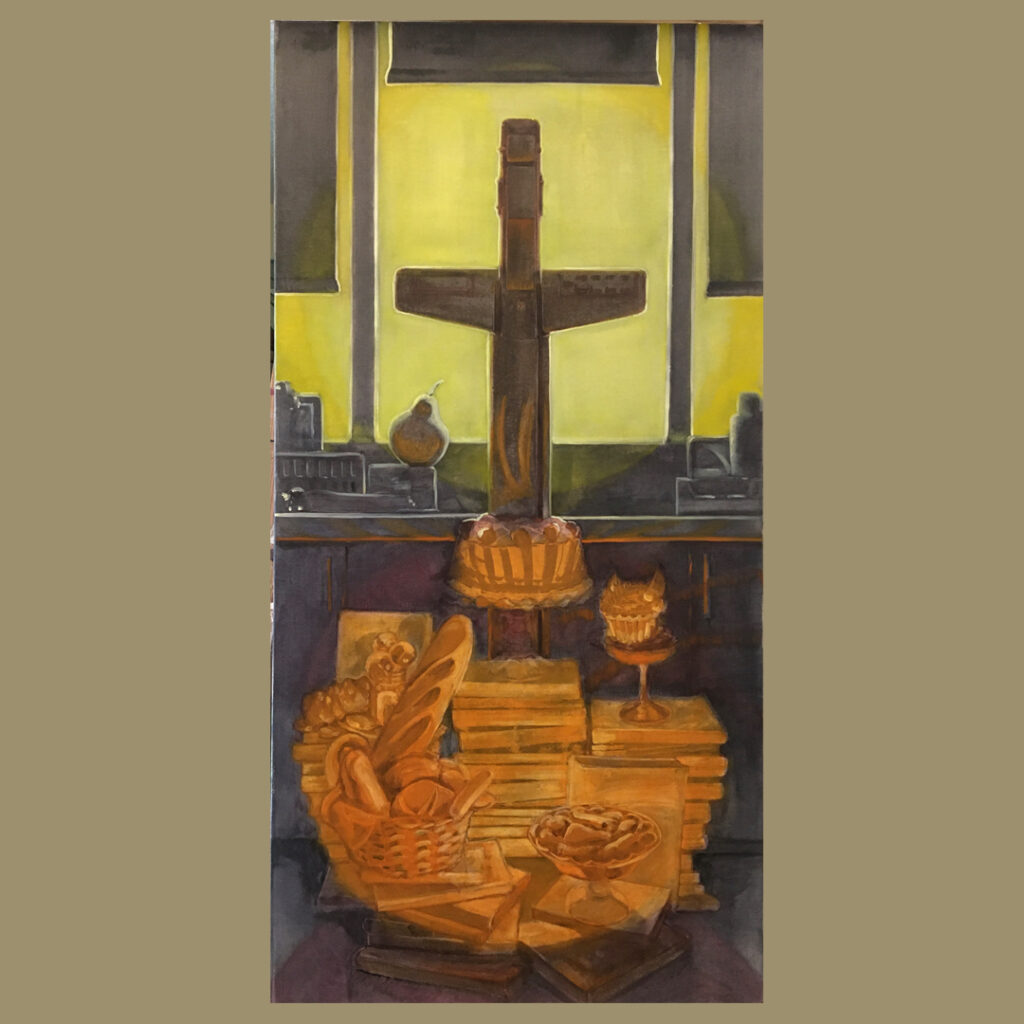
This setting for Every New Salvation was photographed at a walk-in and family practice medical centre in my local area. As you can imagine photographing in these spaces, which are currently being used, requires a quickness, flexibility and sensitivity to maintaining privacy of the users and not getting in the way of the staff. So there is a lot of knowing what elements I need to photograph and understanding that I will need to collage together different elements to fulfill my vision for the painting. Then back at the studio I find an area that has a similar lighting profile to the primary setting to stage the still life portion of the composition. For the still life I checked out 40+ health and diet books from the library to use as props. I imagine the poor librarians, should they stop to wonder why I am checking out so many different kinds of diet books, wondering how conflicted I must be to be trying so many different diets on at once. I certainly got some weight training lugging them all to the studio and back.

New Painting: Enchantment

Enchantment 11 x 14 O/C $750 CAD
Debbie.lee Miszaniec, 2022

So Enchantment came about after I painted Tempting Fruit earlier this year. I loved the way that the chocolate cupcake in that painting just seemed like an over the top amalgam of all the wiley ways it could look like a tempting treat.

Tempting Fruit, 9″x12″ O/C – $595 CAD
Debbie.lee Miszaniec 2022

That painting made me think of other romantic gardens. So of course it was a short step from Bosch’s Garden of Earthly Delights to Fragonard’s french rococo garden in The Swing. Prior to painting Enchantment I baked and frosted several cupcakes, really going for an over the top frothy look for the cupcake like the heroine in Fragonard’s The Swing. From there I painted Cupcake Digest, to study the cupcake in isolation prior to placing it in a larger environment.

Cupcake Digest, 5″x7″ O/C $250 CAD
Debbie.lee Miszaniec 2022

I had two ways to go with my inspiration to create a Fragonard inspired banquet piece in my food series with the little pink pear. I could either couch my food actors in a landscape or I could create an entirely domestic/still life version of The Swing.

So I decided to do both:

Watch my blog to see the landscape version in my Earthly Delights project, It’s currently on the easel and should be finished soon.

For Enchantment I decided to explore that domestic setting because I really loved the potential for changing the perspective in the typical still life setting from something observed at a safe distance, and from slightly above, to one closer to the viewpoint of one of the still life objects, or of a bugs eye view. What was contained in the picture plane now contains the picture plane. It’s not a separate world, it is the world.

New Painting: Thought & Feeling

Thought & Feeling, 12″x12″ O/C, $750 CAD unframed

Our pear is back in Thought & Feeling, torn between Sisyphus and Dionysus again. Early on with this painting I wanted to shift the deep red tone I had started with to a lighter warm pink, creating a feeling of nostalgia in the painting. I saw it as sort of a companion to the longing in the earlier painting I posted about, I Only See You. that painting was about unfulfilled longing, whereas Thought & Feeling is about the power of fond recollections over the intent to follow a reasoned course of action or desire for changes.

New Project Announcement! Earthly Delights – 10 Still Life Paintings in Places

I’m on location here taking reference photos at Reader Rock Gardens in Calgary for my new project, Earthly Delights – 10 Paintings of Food in Places, funded by an individual artist project grant from Calgary Arts Development.

As some of you know from reading earlier posts about the development of my Cravings series, I (intentionally) lost more than a third of my body mass in the last decade. Despite the many health benefits, there are other physical and psychological results of this journey which continue to make maintaining a healthy weight a challenge.

Earthly Delights is about exploring that journey through the genre of still life painting. This project juxtaposes the still life within places to speak to the dilemmas presented by our cultural fascination with food, health and body image.

If you have a story to share about your own experience with health and diet culture, I would love to hear from you

Stay tuned to see the development of the project here, on my Facebook and Instagram channels, or subscribe to my Newsletter!

At the completion of this project I will be proposing exhibition opportunities for Earthly Delights. If you represent or know an organization which would be interested in exhibiting the work publicly make sure to get in touch with me.

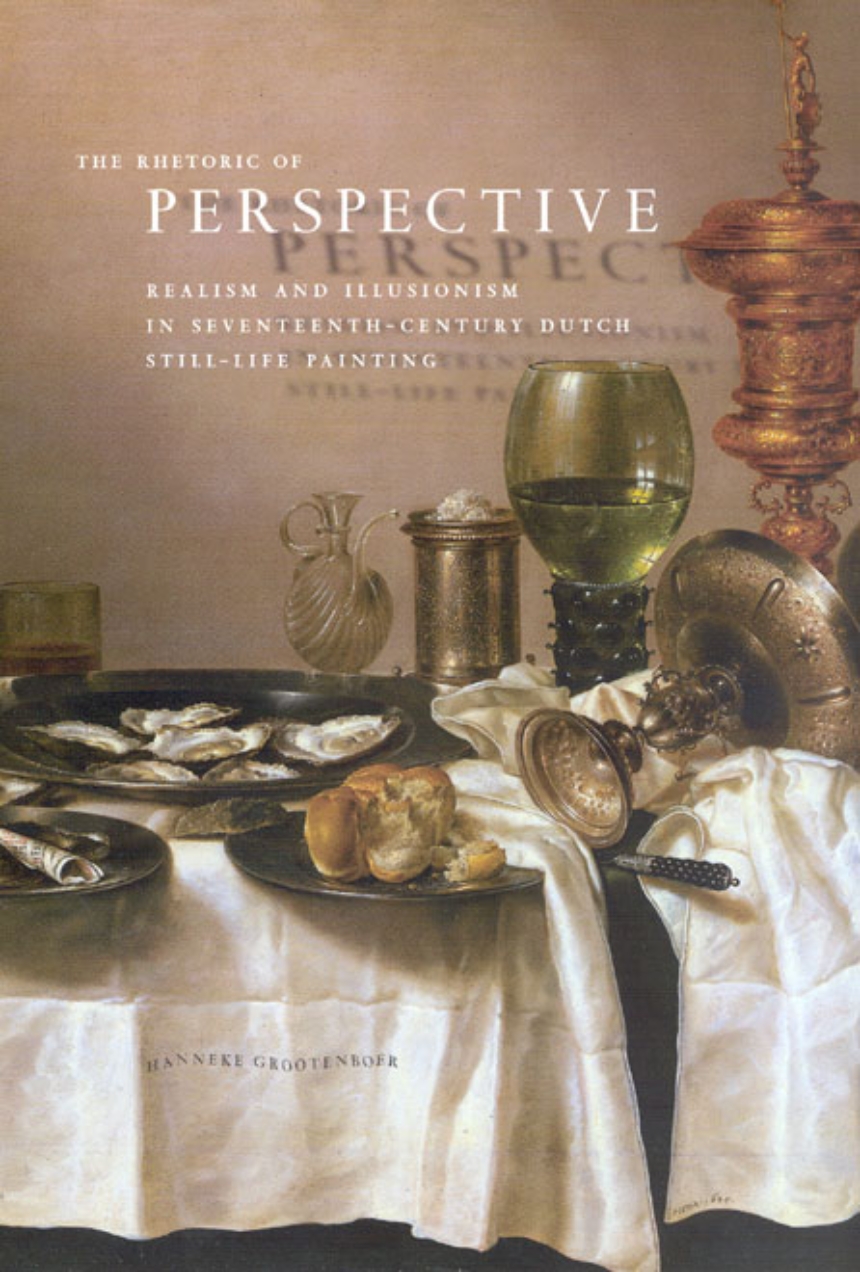
Recent Reads: The Rhetoric of Perspective

The Rhetoric of Perspective: Realism and Illusionism in Seventeenth-Century Dutch Still-Life Painting – Hanneke Grootenboer

Warning, do not think this is a light Sunday read! So this book is a dense one, with a lot of reinterpretation of language to draw connections between disparate writings of art historians and philosophers. However, as I’ve been fascinated with the 17th century Flemish still life painter Clara Peeters, and it had a picture of a dutch still life painting on the cover, I had to commit to read this book fully. I over-ran my renewals at the library on this one but I made it.

Essentially she goes through many convoluted arguments to prove that painting is a form of thought. Well duh, I thought, ask any artist and you will get that answer. I think through art. Not while making art, well that too, hopefully, but through making art. That is why a painting is never merely an execution or illustration of an idea for me. It is an organic thing that shifts, changes and offers new discoveries along the route to completion. It is a discussion, which I initiate, but does not always go in directions I expected.

However despite not requiring her proofs, I gained a great deal from reading them. Of course I was familiar with anamorphism in painting (The Ambassadors (1533), Hans Holbein the Younger), however her exploration of its many iterations lead me to think about the possibilities of incorporating anamorphism into my paintings. Watch for that.

I was also enchanted with the idea of the painting looking back at us, the missing perspective which can be seen illustrated in paintings of reflective surfaces that sometimes depict the artist or the room beyond the painting.

I became fascinated with an idea, which might be my own mis-interpretation of her text, that the blank space behind a breakfast piece might function as an implied mirror. In the book she uses the example, The Holy Family (c.1513) by Joos Van Cleve, paired with Little Breakfast (c.1636) by Pieter Claesz. The former is an icon painting of Mary and the Christ-child at a breakfast table, while the later depicts breakfast items in the same order of the placement in the former; cup. knife, plate of food. However in the former the knife is placed as it would be if Mary, who faces out from the picture plane, had just used it, while in the later its placement is such to imply the painter, or the viewer had just used it. Looking at the table I realized that some of Clara Peeters breakfast pieces also resemble an inversion of that table, but with the knife switched to the side of the table that a right handed person, or Mary herself were she in the position of the viewer, would have placed it. The blank background (the author also studies the practice of painting the backs of canvases during the Dutch Golden Age) implies that the canvas surface, the barrier between us and the invented space of the picture is now on the other side of the table. Thus the breakfast piece paintings place the artist or viewer in the position of the Mary and Christ-child. If there were a mirror in that position the viewer would see herself looking back at someone in the position of the Icon at her breakfast table, thus giving quite a mental trip for a viewer familiar with religious painting: is that my reflection or am I the person that is being addressed by the person in the reflection? This led me to wonder if this reversal of view would have been recognized by the viewer, and would it have appealed to women specifically, asking them to recognize that holy state within themselves, without being as brazen as Albrect Durer when he takes the Christ pose in his Self Portrait at Twenty-eight (1500)?

This is not the authors argument, she is not interested in assigning symbolic meaning to the still-life, in her opinion there have been plenty of art historians who have examined still life looking for messages in the states and varieties of fish, flowers and fruit depicted, and plenty who have found Dutch still life resistant to meaning altogether. Her interest seems to be mainly that the blank space behind the still life, as an arrangement of apparently insignificant objects, is a deliberate relocation of the picture plane, drawing attention to the missing perspective of the painting which looks back at us. If this is the case perhaps Dutch still life painting marks a debate, and a transition in the perception of the place of power within a painting, that of the object painted or that of the painter/viewer?

In the tradition of Icon painting it was perceived that in some ways the depiction and the thing depicted were somehow connected, so the icon depicted as looking back at the viewer from the picture space could be seen and addressed by the viewer. The viewer could appeal to the persona depicted, who would then intercede with the deity. Icons were periodically destroyed throughout history for violating biblical proscriptions against idolatry, or the fear that people would worship the picture of the holy figure rather than using the images as tools to facilitate worship. So a still life painting which draws attention to the paintings surface as a barrier between a natural world and a super-natural world which returns our gaze is not really devoid of meaning, though they may not give their meaning clearly. Sometimes dangerous messages need to be hidden, as the author explores in her discussion of anamorphic art. Still life paintings of ordinary breakfasts, purporting to be un-observed, may be a form of iconoclastic art, spiritual art which incorporates the divine into the mundane, or may even debate the existence of a divine at all.

This is all inspiring for me when thinking about possible connections between the image of food in art and gender, now and historically. While it took me a while to make it through this book I think it is a worthwhile read. I am sure that there is enough here to sustain any number of interpretations and inspirations for artists working within the still life genre or within painting generally.

Recent Reads: The Pop Object

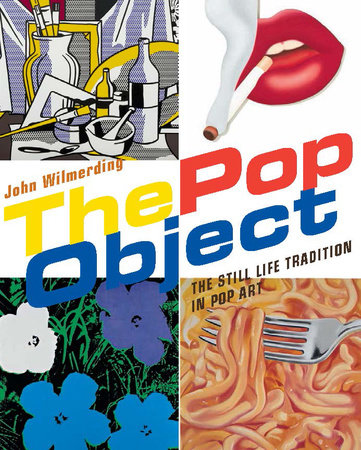
The Pop Object: The Still Life Tradition in Pop Art – John Wilmerding

This is a book produced by the curator for an eponymous exhibition at Acquavella Galleries. As such it is a big beautiful glossy refutation of the perception of still life painting as a skill building exercise or a safe way to explore new techniques. Of course there is text here, but the focus is really on the pictures, which makes it a relatively easy read compared to more theory based books.

The book starts by exploring an apparent art historical blindspot in the analysis of the Pop Art movement: the legacy of still life art and its influences on or in Pop art.

Chapter one covers the origins of the still life genre and documents the parting ways from its role on the edges of more serious subjects in art history. There is a brief discussion of some of the technical innovations, such as chiaroscuro and cubism, which were introduced in still life painting, as well as the hidden symbolism in Christian art’s still life elements. Parallels are mentioned between the prosperity of the Dutch golden age which produced so many realist still life paintings, and the prosperity of 20th century America where/when Pop Art was really ‘popularized’. The proposal is that still life conceptually comes into its own in American Pop art as a form of cultural statement by linking arms with the modern world’s focus on surface, object, commercialism and consumerism.
However, rather than illustrate the depth of significance in the pairing of Pop and still life art by taking an issues based approach to dividing the material, the book then groups and explores contributions by object type. Chapters include Food and Drink, Flowers, Housewares and Appliances, and finally Body Parts and Clothing. The table of contents reads like the aisle signs at a supermarket, so in a book about an art movement which both celebrates and critiques consumer culture, it is not the worst way to divide the contents. However it definitely establishes that the book is promoting Pop Art, not still life art.

Dividing the book categorically like this allows the author to pair images of works by Pop artists with their art history precedents, (Cezanne, Still Life With Apples and Oranges (c.1895) and Segal, Cezanne Still Life #4 (1981)) to demonstrate lineages, as well as exploring within the pop movement how the neutrality of consumer objects become a canvas on which any number of styles of representations may be made, yet still elude meaning within the representation of the particular object (Thiebaud, Four Ice cream Cones (1964), Lichtenstein, Ice Cream Cone (1963) & Oldenberg, Floor Cone (1962)).

For my own interests, I found the chapter on food, and the final chapter, Body Parts and Clothing, to be of the most interest. Pairing western consumer objectifications of the female form in Pop still life artworks with a critical perspective makes sense. So if I am struggling with some avenue of thought along those lines I will be definitely looking to refer back to this book. Otherwise, somewhat like popular culture, the book is a feast for they eyes and meant to be enjoyed for its surface pleasures, rather than complicated meanings.

New painting: Set In Stone

Set In Stone, 24″ x 18″, O/C, CAN$ 1600

Finally completed after 3 months on the easel, give a warm welcome to Set In Stone. As part of my Cravings series exploring food obsession, Set in Stone features returning characters Pink Pear and the Jelly Doughnuts. While I Only See You focused on the exclusive relationship between Pink Pear and Jelly Doughnut, this painting also features an art history guest appearance by the OG stone cold mama of the paleo world, the Venus of Willendorf, reigning atop her divan of doughnuts.

Containing Desire, 10″ x 8″ O/C CAN$ 495 framed

Following on Containing Desire (above), which addressed the futility of trying to contain the seductive influence of our favourite foods, I introduced the idea of the deep biological or evolutionary basis for that power. Since the reason for the dilemma is really nothing to do with the food itself, but to do with our own biological safeguards from starvation, no mountain of contemporary rationalization will depose the reign of our cravings.

Sisyphus Motivation, 20″ x 24″ O/C CAN$ 1600

It’s often the ad libs that bring new discoveries and additions to my visual language. I truly loved painting the conversion of the stripes on the kitchen towel into veins of dripping jelly as first developed in Sisyphus Motivation (above). In Set In Stone I discovered I could morph of the piped cream on the doughnuts into regal purple clouds which surround our paleo-lithic golden goddess. Check out the progression video for how this painting evolved on the canvas:

Progression Video for Set In Stone